
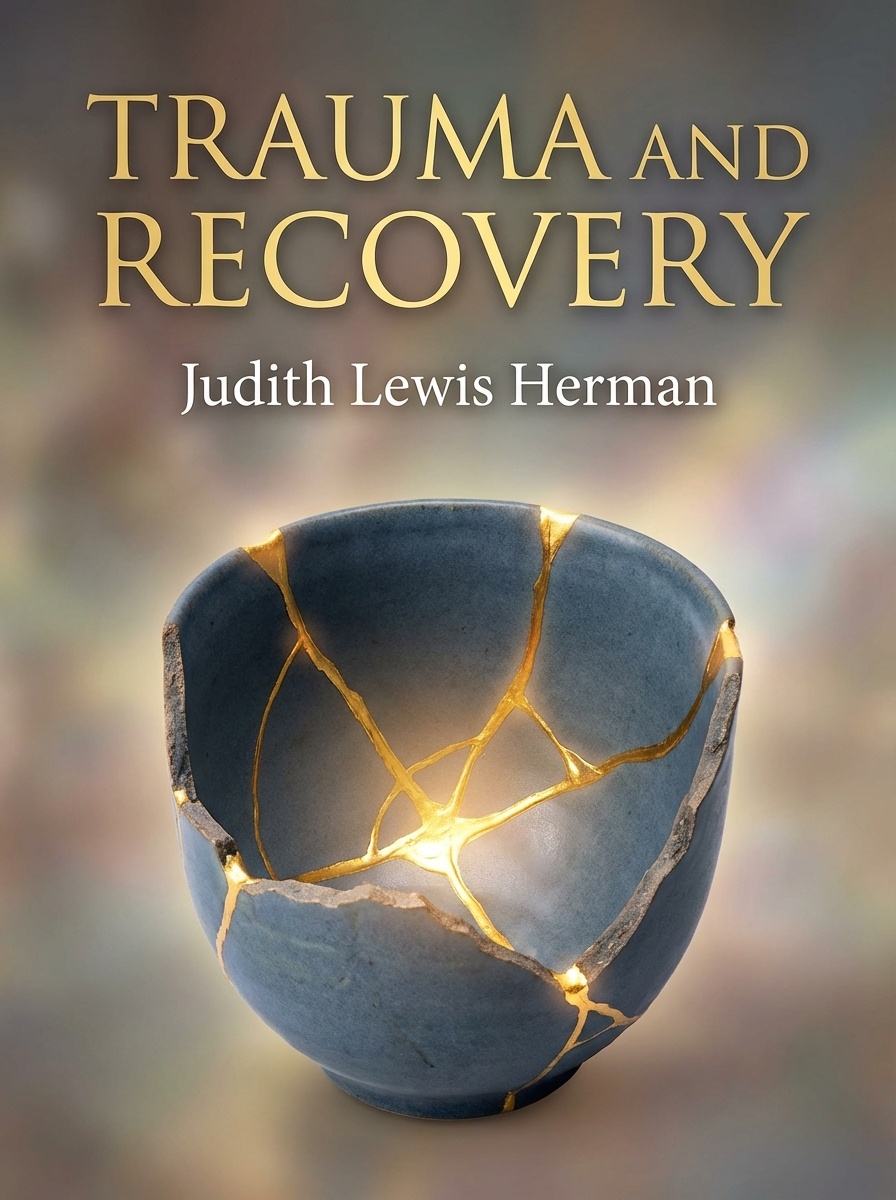
Why You should Read This Book?
This book is the foundational text for understanding the profound impact of psychological trauma and the pathways to healing. It provides an essential framework for comprehending the stages of recovery, offering hope and practical insights for survivors, clinicians, and support networks alike. Read it to gain a compassionate and scientifically grounded perspective on human resilience and the critical importance of trauma-informed care.
Listen to PodcastDialogue turns nonfiction books into engaging podcast mini-series between two hosts, making key ideas easy to absorb on the go. It uses science-backed learning techniques to strengthen memory formation and complements the book's insights with supporting scientific evidence.
This theme explores how trauma is not just an individual psychological issue but a phenomenon deeply tied to history and society. The author argues that our understanding of trauma relies on political movements; without a supportive social context, the reality of trauma is often denied or repressed. It establishes that traumatic events overwhelm the ordinary human adaptations to life, destroying the victim's sense of control, connection, and meaning.
The study of psychological trauma has a strange history of appearing and disappearing. The author explains that society often suffers from 'episodic amnesia.' When a political movement is strong—like the anti-war movement or the feminist movement—society is willing to look at trauma. When those movements fade, the knowledge is often suppressed or forgotten because the stories are too painful or threaten the status quo. For example, the study of hysteria in women was abandoned because it revealed too many uncomfortable truths about sexual abuse in the home. (Book Story): The author describes the era of World War I, where soldiers suffering from 'shell shock' were initially treated as cowards or malingerers. It was only because of the sheer number of traumatized men that psychiatrists were forced to recognize that war itself causes mental breakdown, not a character flaw in the soldier. However, once the war ended, this knowledge was largely discarded until the Vietnam War forced society to learn it all over again.
At the heart of every traumatic event is a feeling of utter helplessness. Trauma occurs when a person is rendered powerless and their connection to others is severed. The author explains that traumatic events generally involve a threat to life or bodily integrity, but the defining characteristic is the victim's inability to control the outcome. This loss of control damages the self-structure and the ability to trust others.
Traumatized people often feel like they are swinging back and forth on a terrible teeter-totter. On one side is 'intrusion,' where the traumatic memory forces itself back into the mind through flashbacks, nightmares, and panic. On the other side is 'constriction,' where the mind shuts down, causing numbness, dissociation, and a trance-like state to avoid the pain. The author describes this oscillation as the 'dialectic of trauma,' where the survivor is caught between reliving the event and feeling dead to the world.
Trauma cannot be understood in a vacuum. The author draws a powerful parallel between political tyranny and domestic tyranny. The methods used by dictators to control populations—instilling fear, isolating victims, and destroying relationships—are the exact same methods used by domestic abusers. Recovery requires a social context that affirms the survivor's humanity; you cannot heal alone in a society that supports the perpetrator.
This theme categorizes the specific symptoms and personality changes that result from trauma. It distinguishes between a single traumatic event (resulting in classic PTSD) and prolonged, repeated trauma (resulting in Complex PTSD). The author details how chronic abuse alters a person's identity, their ability to relate to others, and their fundamental view of the world.
The author breaks down the classic diagnosis of PTSD into three main categories. 'Hyperarousal' means the body is stuck in a permanent state of red alert, reacting to normal sounds or movements as if they are life-threatening. 'Intrusion' involves the event replaying in the mind without permission. 'Constriction' is the body's way of numbing out to survive. Together, these symptoms keep the survivor trapped in the past, unable to fully engage with the present.
While a single event like a car crash causes PTSD, prolonged abuse (like childhood incest, domestic violence, or being a prisoner of war) causes 'Complex PTSD.' The author explains that when trauma is repeated and inescapable, it doesn't just cause symptoms; it deforms the personality. The victim's entire identity is formed around surviving the abuser. This leads to issues that go beyond simple anxiety, including deep depression, self-hatred, and a fragmented sense of self.
In situations of captivity, the perpetrator becomes the most powerful person in the victim's life, effectively taking the place of God. The author explains that to survive, the victim often forms a psychological bond with the abuser (often called traumatic bonding). The perpetrator controls the victim's body, sleep, and reality, forcing the victim to depend on them for life itself. This creates a confusing gratitude toward the abuser for simply letting the victim live.
Chronic trauma destroys the victim's sense of self. The author notes that victims of childhood abuse often believe they are inherently bad or evil. This is a psychological defense: it is safer for a child to believe 'I am bad' (which implies I can change and be good) than to believe 'My parents are bad' (which implies the world is unsafe and I am helpless). This results in a shattered identity and a profound inability to trust others or oneself.
Create a free account to read the remaining themes and key concepts from this book.
Create an accountRecovery is not a chaotic process but follows a specific sequence. The author outlines a three-stage framework for healing. First, the survivor must be safe. Second, they must remember and mourn the trauma. Third, they must reconnect with ordinary life. Attempting to skip stages—like trying to process memories before establishing safety—can be dangerous and re-traumatizing.
The first and most critical task of recovery is guaranteeing the survivor's safety. This includes securing a safe living environment, financial security, and control over one's body. The author emphasizes that therapy cannot focus on uncovering memories until the patient is physically safe and has the skills to manage overwhelming emotions. If you are still in danger or cannot control your self-harming impulses, you are not ready to dig into the past.
Once safe, the survivor begins the work of reconstructing the trauma story. The goal is to transform 'traumatic memory' (which is wordless, frozen, and feels like it is happening now) into 'narrative memory' (which has words, a timeline, and feels like the past). The survivor must tell the story completely and then mourn the loss of who they were and what was taken from them. This is often the most painful stage, involving deep grief.
In the final stage, the survivor turns outward again. Having faced the past, they now focus on creating a future. This involves developing a new 'survivor mission,' deepening relationships, and finding meaningful work. The survivor is no longer defined by the trauma but acknowledges it as a part of their history. They learn to trust others again, but this time with a 'tested' trust, knowing they have the skills to protect themselves.
This theme argues that because trauma happens in relationships (or destroys them), healing must also happen in relationships. The author details the specific nature of the therapeutic bond, the necessity of survivor empowerment, and the power of community groups. It concludes that connecting with others and taking social action are the final steps in restoring a sense of belonging and purpose.
Trauma recovery requires a relationship of trust, usually with a therapist. However, this cannot be a traditional doctor-patient relationship where the doctor has all the power. Because trauma involves an abuse of power, the therapeutic relationship must be collaborative and egalitarian. The therapist is a witness and an ally, not a savior. Strict boundaries are essential to make the survivor feel safe and respected.
The guiding principle of recovery is that the survivor must be the one in control. The author insists that the survivor must direct the pace and goals of their own healing. No one can force a survivor to heal or push them to reveal secrets before they are ready. Restoring the control that was stolen during the trauma is the primary therapeutic goal.
While individual therapy is vital, the author argues that group therapy offers something unique: the realization that 'I am not alone.' Trauma isolates people and makes them feel like freaks. Meeting other survivors dissolves this shame. In a group, survivors can see their own strengths reflected in others and learn that their symptoms are normal reactions to abnormal events.
The final step of recovery often involves a 'survivor mission.' Many survivors find healing by turning their pain into action—advocating for legal changes, educating others, or helping new victims. This transforms the trauma from a meaningless tragedy into a source of power and purpose. It is a way of fighting back and making the world safer, which helps restore the survivor's faith in justice.
Hear the key concepts from this book as an engaging audio conversation.
Listen to Podcast