
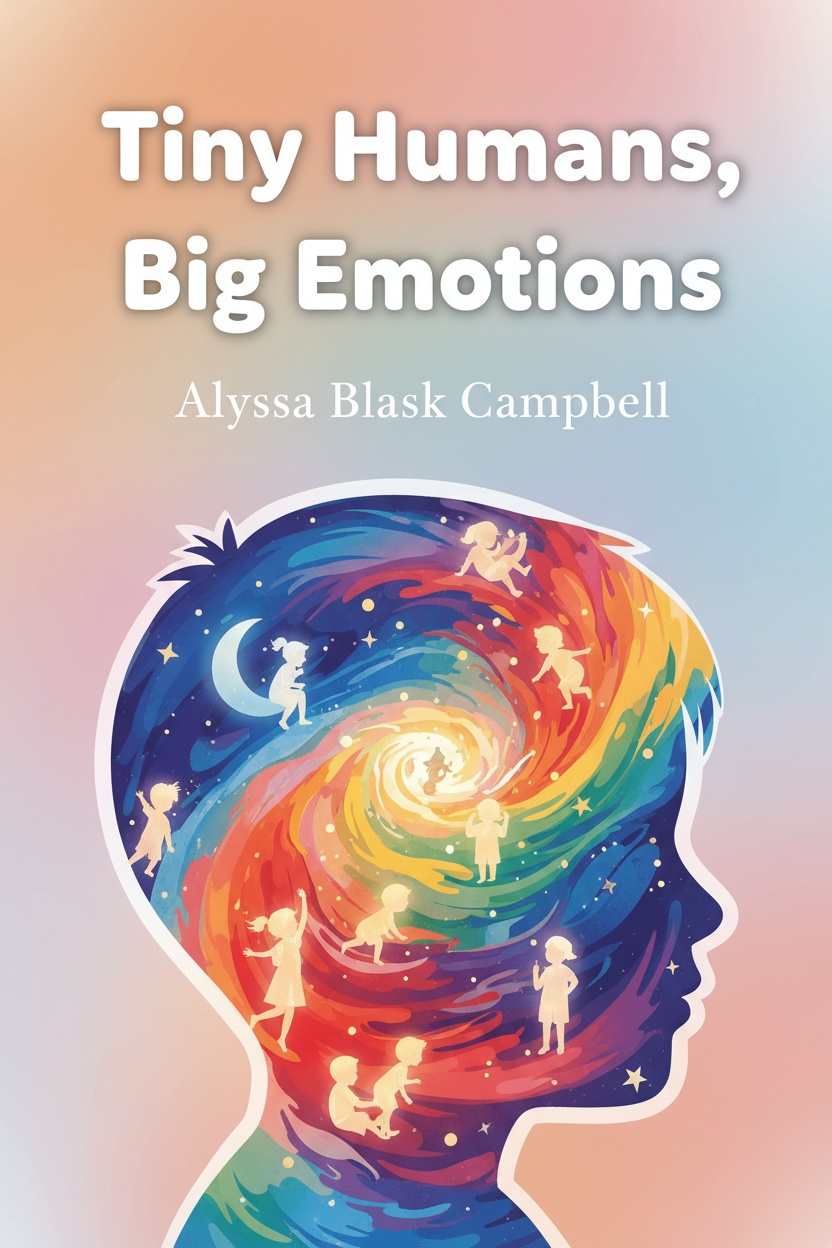
Why You should Read This Book?
This book will transform how you understand and respond to your child's most challenging emotions, from tantrums to meltdowns. It equips you with practical, science-backed strategies for emotion coaching, helping you validate feelings while setting healthy boundaries. By learning to guide your tiny human through their big emotions, you'll foster resilience, strengthen your connection, and create a more peaceful family environment.
Listen to PodcastDialogue turns nonfiction books into engaging podcast mini-series between two hosts, making key ideas easy to absorb on the go. It uses science-backed learning techniques to strengthen memory formation and complements the book's insights with supporting scientific evidence.
The foundational principles of emotional intelligence in 'Tiny Humans, Big Emotions' revolve around understanding that a child's emotional development is not something that happens in isolation. It is deeply influenced by the caregiver's own emotional awareness and regulation. The book posits that to raise emotionally intelligent children, adults must first look inward. This involves recognizing our own emotional triggers and understanding how our reactions and modeling of emotional expression shape our children's developing minds. The authors emphasize that emotional intelligence is a set of skills that can be taught and learned, moving away from the outdated idea that children should simply 'control' their feelings. Instead, the book provides a framework for caregivers to become emotional coaches for their children. This journey begins with creating a secure attachment, which serves as the safe base from which a child can explore and express their emotions without fear of rejection or punishment. A core tenet of this section is the idea that all emotions are valid and serve a purpose. By understanding the neuroscience behind 'big emotions,' caregivers can move from a place of frustration to one of empathy and effective guidance. The book explains that when a child is in the midst of a tantrum or meltdown, their prefrontal cortex (the thinking part of the brain) is offline, and they are operating from their more primitive, emotional brain. This biological understanding is crucial for caregivers to shift their approach from trying to reason with a dysregulated child to first focusing on connection and calming their nervous system.
Emotional intelligence is presented not as a fixed trait but as a dynamic set of skills that are crucial for a fulfilling life and can be developed over time. The book breaks it down into five core components that build upon each other. The first, self-awareness, is the ability to recognize and understand your own emotions as they are happening. For a child, this might look like being able to say 'I'm mad' instead of just hitting. The second component is self-regulation, which is the capacity to manage and control emotional responses in a healthy way. This doesn't mean suppressing feelings, but rather having the tools to calm down when upset or to handle frustration without falling apart. Empathy, the third component, is the ability to understand and share the feelings of another person. The book stresses that empathy is best taught through modeling, by showing children that we understand and can connect with their feelings. The fourth component is motivation, specifically intrinsic motivation, which is the drive to achieve goals for personal fulfillment rather than for external rewards. Finally, social skills are the tools needed to build and maintain healthy relationships, communicate effectively, and navigate social situations. These five components are interconnected and form the foundation for raising emotionally resilient and compassionate individuals.
The book heavily emphasizes that the caregiver is the primary architect of a child's emotional world. A secure attachment, where the child feels safe, seen, and soothed, is presented as the bedrock of healthy emotional development. This secure base gives children the confidence to express their full range of emotions, knowing they will be met with acceptance and support. When caregivers respond to a child's distress with empathy and connection, they are wiring the child's brain for emotional resilience. The concept of modeling is also central to the caregiver's role. Children are constantly observing and learning from the adults around them. How a caregiver handles their own anger, frustration, or disappointment is a powerful lesson for a child. The book encourages caregivers to be mindful of their own emotional expressions and to model healthy coping strategies. This doesn't mean being perfect, but it does mean being authentic and, when you do lose your cool, modeling how to repair the relationship by apologizing and reconnecting. In one book story, a father is frustrated trying to assemble a toy and yells in anger. His young child, who is watching, later mimics the same behavior when their block tower falls. This illustrates the powerful impact of modeling and the importance of caregivers being conscious of their own emotional responses. The story highlights how children internalize the emotional regulation strategies they witness in their caregivers.
The book simplifies the neuroscience behind emotional outbursts to empower caregivers with a deeper understanding of what is happening in their child's brain and body. It explains that when a child experiences a 'big emotion' like intense anger or fear, their amygdala, the brain's 'smoke detector,' takes over. This triggers a fight, flight, or freeze response, flooding their body with stress hormones like cortisol and adrenaline. In this state, the prefrontal cortex, the part of the brain responsible for rational thought, decision-making, and impulse control, is essentially 'offline'. This is why trying to reason with a child in the middle of a tantrum is often futile; they are biologically incapable of accessing the thinking part of their brain. The book also introduces the concept of the 'Triangle of Growth,' which prioritizes sensory regulation as the foundation, followed by emotional regulation, and then communication skills. This model emphasizes that before a child can process their emotions or talk about their behavior, their sensory system needs to be calm. Understanding this brain-body connection helps caregivers shift their focus from managing behavior to first helping their child regulate their nervous system. This might involve sensory strategies like a tight hug, rocking, or providing a quiet space. Only after the child's nervous system has calmed down can they begin to access their thinking brain and learn from the experience.
The Collaborative Emotion Processing (CEP) Method is the core framework of 'Tiny Humans, Big Emotions,' offering a structured yet flexible approach to helping children and adults navigate emotions together. It's a departure from traditional, behavior-focused parenting models that often prioritize compliance over connection. The CEP method is built on the premise that emotions are not problems to be solved but experiences to be processed collaboratively. This approach empowers caregivers to act as emotional coaches, guiding their children through their feelings in a way that builds trust and strengthens their relationship. A key aspect of the CEP method is its emphasis on the adult's role in the process. It recognizes that a caregiver's ability to co-regulate with a child is directly linked to their own self-awareness and emotional regulation skills. Therefore, a significant portion of the method is dedicated to helping adults understand their own emotional landscapes, including their triggers and biases, so they can respond to their children with intention rather than reaction. The method is designed to be a practice, not a perfect science, encouraging caregivers to be compassionate with themselves as they learn and grow alongside their children.
The Collaborative Emotion Processing (CEP) method is presented as a revolutionary approach that shifts the focus from managing a child's behavior to co-regulating their emotions. It's a research-based framework designed to help caregivers and children process emotions together, fostering a deeper connection and building long-term emotional intelligence. The core idea is that children learn to regulate their emotions not in isolation, but through their interactions with a calm and supportive adult. The CEP method provides the tools and strategies for adults to become that calming presence for their children, even in the midst of a storm. The method is not about having all the right words or a magic script to stop a tantrum. Instead, it's about a way of being with a child that communicates safety, acceptance, and a willingness to feel with them. It's a collaborative process where the adult and child work together to navigate the emotional landscape. This approach helps children feel understood and supported, which in turn helps them to calm their nervous systems and, over time, develop their own self-regulation skills.
A cornerstone of the CEP method is the emphasis on the adult's own emotional work. The book argues that we cannot effectively guide our children through their big emotions if we are not aware of and managing our own. This starts with self-awareness, which involves paying attention to our own internal states – our thoughts, feelings, and bodily sensations – especially in stressful parenting moments. The book encourages caregivers to identify their personal triggers, those specific behaviors or situations that tend to provoke a strong emotional reaction in them. By understanding our triggers, we can be better prepared to respond with intention rather than reacting from a place of anger or frustration. The authors also delve into the concept of implicit biases, the unconscious attitudes and stereotypes that can affect our perceptions and actions. For example, a caregiver might have an implicit bias that boys shouldn't cry, which could lead them to dismiss their son's sadness. The CEP method calls on adults to courageously examine these biases and how they might be impacting their parenting. This introspective work is not about achieving perfection but about fostering a practice of mindfulness and self-compassion, which ultimately allows us to be more present and attuned to our children's needs.
The CEP method is broken down into five distinct phases that guide the process of collaboratively working through an emotion. The first phase is 'Allowing Emotions to Exist,' which involves creating a safe space for the child to express their feelings without judgment or dismissal. This means moving away from phrases like 'You're fine' or 'Don't cry.' The second phase is 'Recognizing and Naming Emotions.' Here, the caregiver helps the child build their emotional vocabulary by labeling the feeling they are experiencing, for example, by saying, 'It looks like you're feeling really frustrated.' The third phase is 'Feeling Secure in Experiencing a Wide Spectrum of Emotions Over Time.' This is about the long-term goal of helping children understand that all emotions are a normal part of the human experience and that they can handle even the most challenging feelings. The fourth phase is 'Seeking Support Through Coping Strategies.' Once the emotion has been acknowledged and named, the caregiver can help the child find healthy ways to manage the feeling, such as taking deep breaths, getting a hug, or hitting a pillow. It's important to note that a child may not be ready for coping strategies until they have had time to fully feel the emotion. The final phase is 'Resolving Emotions,' which involves either solving the problem that caused the emotion or learning to let it go. These five phases provide a clear roadmap for caregivers to follow, turning challenging emotional moments into opportunities for connection and growth.
Create a free account to read the remaining themes and key concepts from this book.
Create an accountThis section of 'Tiny Humans, Big Emotions' translates the foundational concepts and the CEP method into practical, in-the-moment strategies for caregivers. It addresses the common question of 'What do I do when my child is having a meltdown right now?' The focus is on immediate, actionable steps that prioritize connection and de-escalation. The book emphasizes a crucial principle: calm before you teach. This means that when a child is emotionally dysregulated, the caregiver's primary goal is to help them return to a state of calm, not to lecture them about their behavior. The authors provide concrete techniques for co-regulation, such as using a calm and empathetic tone of voice, offering physical comfort, and validating the child's feelings. A significant portion of this theme is dedicated to the topic of boundaries. The book presents boundaries not as a form of punishment or control, but as a way to create a sense of safety and security for the child. It offers guidance on how to set and hold boundaries in a way that is both firm and loving, even when the child is pushing back. Finally, this section addresses what to do after the emotional storm has passed. It provides strategies for talking to a child about their behavior in a way that fosters accountability and empathy, rather than shame. The goal is to turn these challenging moments into learning opportunities that strengthen the parent-child relationship and build the child's emotional intelligence.
When a child is in the throes of an emotional outburst, the book advocates for a response that prioritizes connection over correction. The key principle is to focus on calming the child's nervous system before any teaching or problem-solving can occur. This is because, as established earlier, a child's thinking brain is offline during a meltdown. The book offers several practical strategies for in-the-moment responses. One is to get down on the child's level and use a calm, soothing voice. This communicates to the child's nervous system that they are safe. Another strategy is to validate their feelings, even if you don't agree with their behavior. You can say something like, 'I see that you're very angry right now. It's okay to be angry.' This acknowledgement helps the child feel seen and understood, which can be incredibly calming. The book also suggests offering physical comfort, such as a hug or a gentle hand on their back, if the child is open to it. For some children, however, physical touch can be overstimulating during a meltdown, so it's important to be attuned to the child's cues. The overarching goal of these in-the-moment strategies is to act as a calming anchor for the child, helping them to co-regulate their emotions and return to a state where they can think and learn.
The book presents boundaries as a fundamental aspect of loving and effective parenting, essential for a child's sense of safety and security. Boundaries are not about controlling the child, but about providing a predictable and safe structure within which they can explore and grow. The authors emphasize that boundaries should be set with empathy and held with firmness. This means acknowledging the child's feelings about the boundary while still maintaining it. For example, if a child is upset about screen time ending, a caregiver could say, 'I know you're sad that screen time is over. It's hard to stop when you're having fun. And, it's still time to be done.' This approach validates the child's emotions while reinforcing the limit. The book also discusses the importance of flexibility in boundary setting. While consistency is important, there may be times when it makes sense to adjust a boundary based on the situation or the child's needs. This teaches children that rules are not arbitrary and that their needs are taken into consideration. In one book story, a mother has a firm rule about no toys at the dinner table. However, one evening her child is particularly anxious about an upcoming doctor's appointment. The mother allows the child to bring a small, comforting toy to the table, recognizing that the child's emotional need for security in that moment outweighs the usual rule. This demonstrates the concept of holding boundaries with flexibility and attunement to the child's emotional state.
Once the emotional storm has passed and the child is calm and regulated, the book provides guidance on how to revisit the situation to promote learning and growth. The goal of this conversation is not to shame or punish the child, but to help them understand the impact of their behavior and develop empathy for others. A key technique is to approach the conversation with curiosity rather than accusation. Instead of saying, 'Why did you hit your sister?' a caregiver could ask, 'What was going on for you when you hit your sister?' This opens the door for the child to share their perspective without feeling defensive. The book also suggests focusing on the feeling that drove the behavior. For example, a caregiver might say, 'It seems like you were feeling really angry when you threw your toy. It's okay to feel angry, but it's not okay to throw toys.' This separates the emotion from the behavior, validating the feeling while still holding the boundary. Another important technique is to help the child consider the other person's perspective. A caregiver could say, 'How do you think your sister felt when you hit her?' This helps the child develop empathy and understand the consequences of their actions. The conversation should end with a focus on repair and problem-solving. The caregiver can help the child think of what they can do to make things right, such as apologizing or helping to fix what was broken. This fosters a sense of accountability and empowers the child to make better choices in the future.
The final part of 'Tiny Humans, Big Emotions' shifts from reactive, in-the-moment responses to proactive strategies aimed at preventing emotional outbursts and fostering long-term emotional intelligence. This section is about creating an environment and a family culture that supports emotional well-being and reduces the frequency and intensity of meltdowns. The authors introduce the idea of 'pre-teaching,' which involves preparing children for potentially challenging situations in advance. This could include talking about what to expect at a social event or practicing how to handle a disagreement with a sibling. The book also provides a nuanced discussion on discipline, moving beyond the traditional reward and punishment model. It distinguishes between consequences, which are about teaching, and punishments, which are about control. The goal is to help children develop intrinsic motivation to behave in positive ways, rather than relying on external motivators. This section also addresses the complexities of sibling relationships, offering strategies for navigating conflicts and fostering empathy between children. Finally, the book looks at the big picture, discussing how the principles of the CEP method can be applied to cultivate a compassionate and emotionally intelligent future for our children. It's about equipping them with the skills they need to not only navigate their own emotional worlds but also to contribute positively to the world around them.
This concept focuses on the idea that many meltdowns can be prevented by being proactive and tuning into a child's needs and triggers. One key strategy is 'pre-teaching,' which involves preparing a child for a situation that might be challenging for them. For example, if a child gets anxious in new social situations, a caregiver could talk them through what to expect at an upcoming party, who will be there, and what they can do if they start to feel overwhelmed. This helps the child feel more prepared and in control, reducing the likelihood of a meltdown. Another proactive strategy is to ensure a child's basic needs are met. The book reminds caregivers to consider if a child is hungry, tired, or overstimulated, as these factors can significantly impact their ability to regulate their emotions. Creating predictable routines can also be very helpful, as they provide a sense of security and reduce anxiety for children. The book also introduces the 'What if' game as a playful way to practice problem-solving skills. For example, a caregiver could say, 'What if your brother takes the toy you are playing with? What could you do?' This helps children build a toolbox of strategies they can use when they encounter challenging situations, making them less likely to resort to a meltdown.
The book offers a clear distinction between these three common disciplinary tools, advocating for an approach that prioritizes teaching over control. Punishments are defined as actions taken to make a child feel bad or suffer for their behavior. The authors argue that punishment is often ineffective in the long run because it can lead to resentment, fear, and a focus on not getting caught rather than on understanding why the behavior was wrong. Rewards, on the other hand, are external motivators used to encourage good behavior. While they may work in the short term, the book cautions that an over-reliance on rewards can undermine a child's intrinsic motivation. They may start to do things only to get a reward, rather than because it's the right thing to do or because it brings them personal satisfaction. Consequences, in contrast, are presented as a teaching tool. Natural consequences are the direct result of a child's actions, without any adult intervention. For example, if a child refuses to wear a coat, the natural consequence is that they will feel cold. Logical consequences are set by an adult and are directly related to the behavior. For example, if a child makes a mess, the logical consequence is that they have to help clean it up. The key is that consequences are delivered with empathy and are focused on helping the child learn from their mistakes, rather than on making them suffer.
The book acknowledges the unique challenges of applying these principles in a household with more than one child. It provides strategies for navigating sibling conflicts in a way that fosters empathy and strengthens their relationship. One key strategy is to avoid taking sides or casting one child as the victim and the other as the aggressor. Instead, the caregiver's role is to act as a neutral facilitator, helping each child express their feelings and perspective. The book encourages caregivers to help siblings develop their own problem-solving skills. Instead of solving the conflict for them, a caregiver can guide them through the process by asking questions like, 'What's the problem here?' and 'What are some ideas for how we can solve this?' This empowers children to work through their disagreements respectfully and find mutually agreeable solutions. Fostering empathy between siblings is another important focus. Caregivers can do this by encouraging each child to consider the other's feelings. For example, a caregiver might say, 'Your sister looks really sad. I wonder what would help her feel better?' The book also suggests creating opportunities for positive connection between siblings, such as through shared activities or special 'sibling time.' By proactively nurturing their bond, caregivers can create a foundation of love and respect that will help them navigate the inevitable conflicts of siblinghood.
The final concept in the book broadens the scope from individual family dynamics to the long-term vision of raising a generation of emotionally intelligent and compassionate individuals. The authors argue that the skills of emotional intelligence – self-awareness, self-regulation, empathy, motivation, and social skills – are not just essential for a happy childhood, but are also the building blocks of a more compassionate and connected society. The book emphasizes that by teaching our children to understand and manage their own emotions, we are also teaching them how to be good friends, partners, and community members. By modeling empathy and compassion in our homes, we are planting the seeds for a more empathetic and compassionate world. The book ends on a hopeful and empowering note, reminding caregivers that the daily, often challenging, work of parenting has a profound and lasting impact. By choosing to respond to our children's big emotions with connection and empathy, we are not just raising emotionally healthy kids; we are contributing to a more emotionally intelligent and compassionate future for everyone. The ultimate goal is to equip children with the internal resources they need to navigate the complexities of life with resilience, kindness, and a strong sense of self.
Hear the key concepts from this book as an engaging audio conversation.
Listen to Podcast