
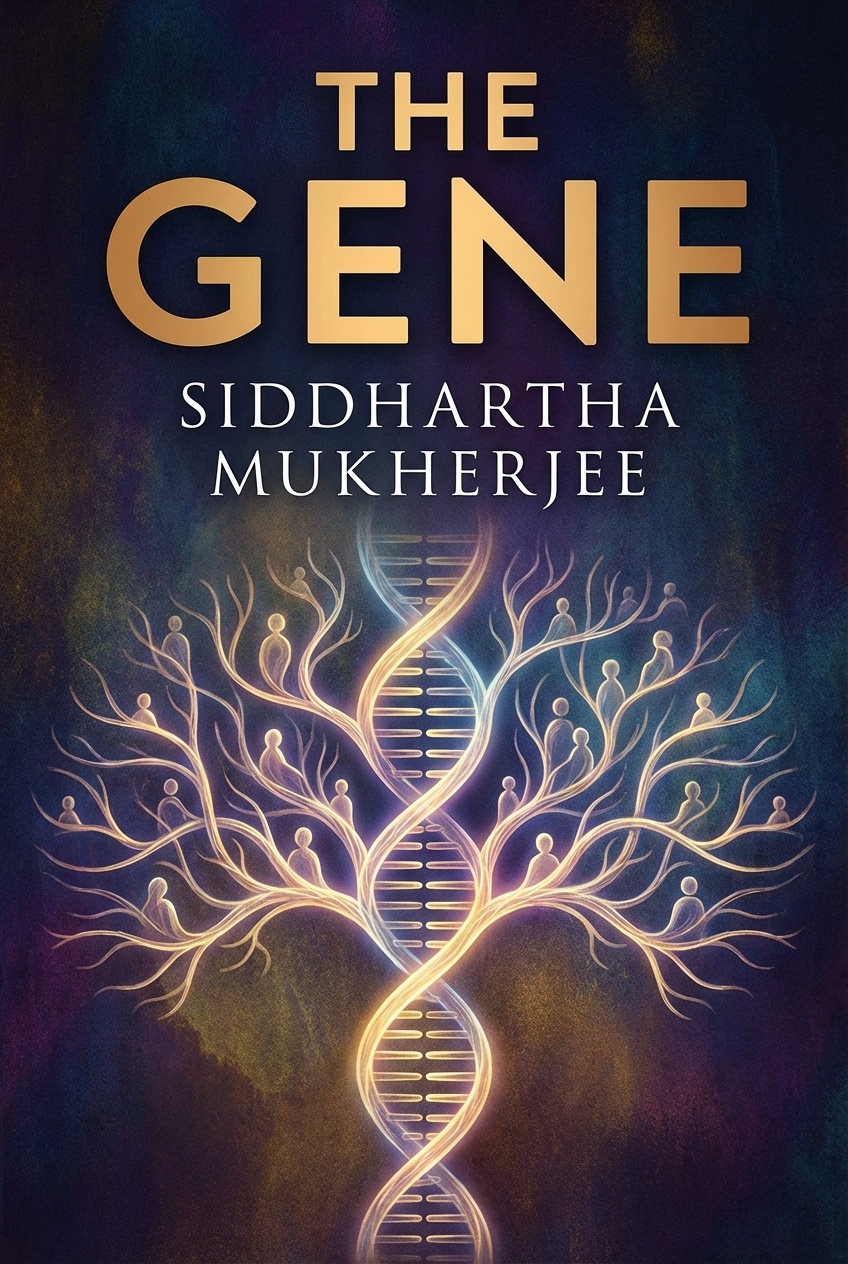
Why You should Read This Book?
This book masterfully weaves together the scientific discoveries, historical context, and personal stories behind the gene, from Mendel's peas to CRISPR technology. Mukherjee not only clarifies the complex science of heredity but also explores the profound ethical, philosophical, and societal questions that have shaped and continue to challenge our understanding of what it means to be human. To truly grasp the essence of life, disease, and our future, "The Gene" is an indispensable journey into the very blueprint of existence.
Listen to PodcastDialogue turns nonfiction books into engaging podcast mini-series between two hosts, making key ideas easy to absorb on the go. It uses science-backed learning techniques to strengthen memory formation and complements the book's insights with supporting scientific evidence.
This era marks the clumsy but critical transition from mystical ideas about blood and ancestry to the hard science of genetics. It begins with a monk in a garden and ends with the horrifying misapplication of his ideas by state governments. The central theme here is the discovery that heredity is not a fluid blending of traits, but the transmission of discrete, hard particles of information.
In the mid-1800s, an Augustinian friar named Gregor Mendel conducted meticulous experiments with thousands of pea plants. Before Mendel, people believed traits blended together like paint (e.g., a tall parent and a short parent would produce a medium child). Mendel discovered that this was wrong. He showed that heredity works through discrete units—what we now call genes—that remain distinct and intact. He identified that some traits are 'dominant' (overpowering) and others are 'recessive' (hidden unless two copies are present), proving that information is passed down in specific, predictable packets rather than a random mix.
Mendel published his groundbreaking work in 1865, but it was completely ignored for decades. At the time, biology was focused on observation and classification, while Mendel was using mathematics and statistics. The scientific community simply didn't have the framework to understand that biology could be quantified. It wasn't until the turn of the 20th century that three different scientists independently rediscovered Mendel's laws, officially launching the field of 'genetics'—a term coined by William Bateson to describe the study of heredity and variation.
Before genetics existed, humanity struggled to explain how we resemble our parents. Aristotle proposed that a form-giving principle from the father shaped the material provided by the mother. Much later, Charles Darwin, despite his brilliance in evolution, got heredity wrong. He proposed 'Pangenesis,' a theory where every cell in the body throws off tiny particles called 'gemmules' that collect in the reproductive organs. This implied that changes to your body during your life (like building muscle) could be passed to your children. Mendel's work eventually disproved this, showing that genetic information is isolated from our daily physical changes.
Once scientists realized genes determined traits, a dangerous political movement emerged: Eugenics. Proponents believed they could 'perfect' humanity by breeding out 'undesirable' traits like low intelligence, poverty, or promiscuity. This culminated in the tragic story of Carrie Buck (Book Story #1). Carrie was a young woman in Virginia who was institutionalized and ordered to be sterilized by the state because she, her mother, and her daughter were deemed 'feeble-minded.' The Supreme Court upheld this decision, famously declaring 'Three generations of imbeciles are enough.' This pseudo-science justified forced sterilizations in the US and eventually fueled the racial hygiene atrocities of Nazi Germany.
This period represents the golden age of molecular biology, where the abstract concept of the 'gene' was finally pinned down to a physical chemical structure. Scientists moved from observing the effects of heredity (like pea colors) to understanding the physical mechanism that makes it possible. It is the story of how we discovered that the secret of life is written in a chemical code.
For a long time, scientists assumed proteins were the carriers of genetic information because they are complex and versatile. DNA, a simple acid found in the nucleus, was thought to be too boring and repetitive to hold the instructions for life. Through a series of experiments involving bacteria (specifically the Griffith and Avery experiments), researchers were shocked to discover that it was this 'boring' DNA that could transform a harmless bacterium into a deadly one. This shifted the entire focus of biology toward understanding nucleic acids.
The race to visualize DNA ended with James Watson and Francis Crick, relying heavily on the X-ray crystallography data of Rosalind Franklin and Maurice Wilkins. They realized DNA was structured as a double helix—a twisted ladder. This structure was the key to the whole mystery. Because the two strands were complementary (A always pairs with T, C always pairs with G), the molecule contained a built-in mechanism for copying itself. You could pull the strands apart, and each side served as a perfect template to rebuild the other.
Francis Crick articulated the fundamental rule of molecular biology, known as the Central Dogma. It describes the one-way flow of genetic information: DNA makes RNA, and RNA makes Protein. DNA is the master archive kept safe in the nucleus; RNA is the temporary photocopy sent out to the factory floor; and Proteins are the actual machines and structures that build the body. This rule explained that while DNA controls the body, the body cannot rewrite the DNA (with some rare exceptions discovered later, like retroviruses).
Once the structure was known, scientists had to crack the code. They figured out that DNA is written in three-letter words called 'codons.' A sequence of three DNA bases (like ATG) translates into one specific amino acid. Since proteins are just long chains of amino acids, the sequence of DNA letters dictates the exact shape and function of the protein. This universal code is shared by almost every living thing on Earth, from humans to bacteria, proving a common ancestry for all life.
Create a free account to read the remaining themes and key concepts from this book.
Create an accountHaving learned to read the code, this era focuses on humanity's first attempts to write it. It covers the explosion of biotechnology, the massive ambition of mapping the entire human genome, and the early, often dangerous attempts to fix broken genes in living people. It is a transition from observation to intervention.
Scientists discovered enzymes that act as molecular scissors and glue, allowing them to cut a gene out of one organism and paste it into another. This technology, called Recombinant DNA, launched the biotech industry. For the first time, we could force bacteria to manufacture human insulin or growth hormones. It meant that genes were not mystical entities tied to a specific species; they were interchangeable parts that could be moved between creatures.
This was the biological equivalent of the moon landing. An international consortium of scientists set out to read the entire sequence of the 3 billion letters that make up a human. It was a massive race between a public government effort and a private company (Celera). The project revealed that humans have far fewer genes than expected (about 20,000, similar to a microscopic worm), shattering the idea that biological complexity requires more genes. It provided the 'reference map' for human biology.
The dream was to cure genetic diseases by inserting healthy genes into sick patients using modified viruses. However, this field hit a tragic wall with the death of Jesse Gelsinger (Book Story #2). Jesse, a teenager with a rare liver disorder, volunteered for a safety trial. The virus used to deliver the gene triggered a massive, fatal immune reaction. His death exposed the hubris of early geneticists who underestimated the body's complex defense systems, setting the field back by a decade.
As genetic engineering became possible, scientists themselves became terrified of the potential risks, such as accidentally creating a super-virus. In a historic move, they gathered at the Asilomar Conference to impose a voluntary moratorium on their own research until safety guidelines could be established. This was a rare moment where scientific curiosity was paused by a sense of moral and social responsibility.
This section moves away from the lab bench and into the clinic and the home. It explores how genetics applies to real human lives, explaining the difference between simple single-gene diseases and complex traits like intelligence or schizophrenia. It emphasizes that genes are not destiny; they are probabilities interacting with the environment.
The book distinguishes between monogenic diseases (caused by one broken gene, like Cystic Fibrosis) and polygenic diseases (caused by many genes acting together, like heart disease or cancer). While we have had great success finding the causes of monogenic diseases, most human ailments are polygenic. This explains why there is rarely a single 'gene for' common conditions. Cancer, specifically, is described as a genetic disease of our own cells—a distortion of the normal growth genes.
Genes rarely dictate a result with 100% certainty. Instead, they create a susceptibility. The book uses the formula: Phenotype (what you see) = Genotype (your DNA) + Environment + Triggers + Chance. For example, you might have a genetic predisposition for lung cancer, but if you never smoke (environment/trigger), that genetic potential may never become reality. This interplay means we have agency over our health despite our DNA.
The book explores the philosophical question of how much of 'us' is pre-written. While traits like gender and eye color are genetic, complex things like sexual orientation or temperament are a mix of biology and other factors. The author argues that genes define the boundaries of the possible—they set the limits of our potential—but they do not determine the exact course of our lives.
Mukherjee uses the history of mental illness in his own family (schizophrenia and bipolar disorder) to explain the concept of 'penetrance' and familial clustering. He illustrates how a genetic vulnerability can run through a family tree, striking some members while sparing others. This personal angle highlights the terrifying reality of genetic inheritance: it is a lottery. The same gene pool that produces brilliance or creativity can, with a slight shift in combination or environment, produce debilitating mental suffering.
Post-Genome Project, scientists realized that having the 'parts list' (the genome) wasn't enough. This era focuses on how the parts interact. It introduces the complexity of regulation—how genes are turned on and off—and the massive technological leaps that made reading DNA cheap and accessible to the public.
When the genome was finally published, it was a surprise. We discovered that large chunks of our DNA don't code for proteins at all. Originally dismissed as 'junk DNA,' we now understand that these non-coding regions are actually control panels and switches. They determine when and where genes are used. This revealed that human complexity comes from the sophisticated regulation of genes, not just the genes themselves.
Epigenetics is the study of chemical markers that sit on top of the DNA and tell it whether to be open (readable) or closed (ignored). These markers can be influenced by stress, diet, and environment. This provides a mechanism for the environment to leave a physical imprint on our biology, effectively bridging the gap between nature and nurture. It explains how identical twins can drift apart biologically over time.
The cost of sequencing a human genome plummeted from $100 million to under $1,000 in just over a decade, beating Moore's Law. This democratization of data meant that genetics could move from elite research labs to everyday life. It allowed for the rapid identification of rare diseases and the ability to compare thousands of genomes to find subtle patterns.
With accessible sequencing, genetics entered the courtroom and the living room. We can now trace criminal suspects through distant relatives' DNA (as seen in the Golden State Killer case) and map our own deep ancestry. This application of genetics proves that we leave a biological trail wherever we go, and that our family trees are far more interconnected than we previously realized.
The final section looks forward. We have moved from reading (sequencing) to writing (recombinant DNA) to editing (CRISPR). We now possess the tools to permanently alter the human species. This section is a profound meditation on the responsibility that comes with the power to direct our own evolution.
CRISPR is a revolutionary technology derived from bacteria that acts like a word processor for DNA. It allows scientists to find a specific sequence of DNA inside a living cell, cut it out, and replace it with something else. Unlike previous methods, it is cheap, easy, and precise. This offers the potential to cure genetic diseases like Sickle Cell Anemia permanently, but also opens the door to editing embryos.
The ability to edit the 'germline' (sperm, eggs, and embryos) means changes are passed down to all future generations. This raises massive ethical red flags. If we edit out a disease, do we also edit out the resilience or creativity that might be linked to it? Who gets to decide what is a 'defect' and what is just 'difference'? The book warns that we risk turning human biology into a consumer product.
If we can change our genes, we are no longer just the product of evolution; we are the authors of it. This blurs the line between 'therapy' (fixing a broken part) and 'enhancement' (upgrading a working part). The book asks us to consider if we will become a species that is biologically stratified, where the rich can buy better genes for their children.
The book concludes by reconciling the power of genes with the power of human choice. While genes provide the script, we are the actors and directors. We are not robots programmed by DNA. Our ability to understand our genes gives us the unique power to transcend them. We are the only species that can understand its own instructions and choose to disobey them.
Hear the key concepts from this book as an engaging audio conversation.
Listen to Podcast