
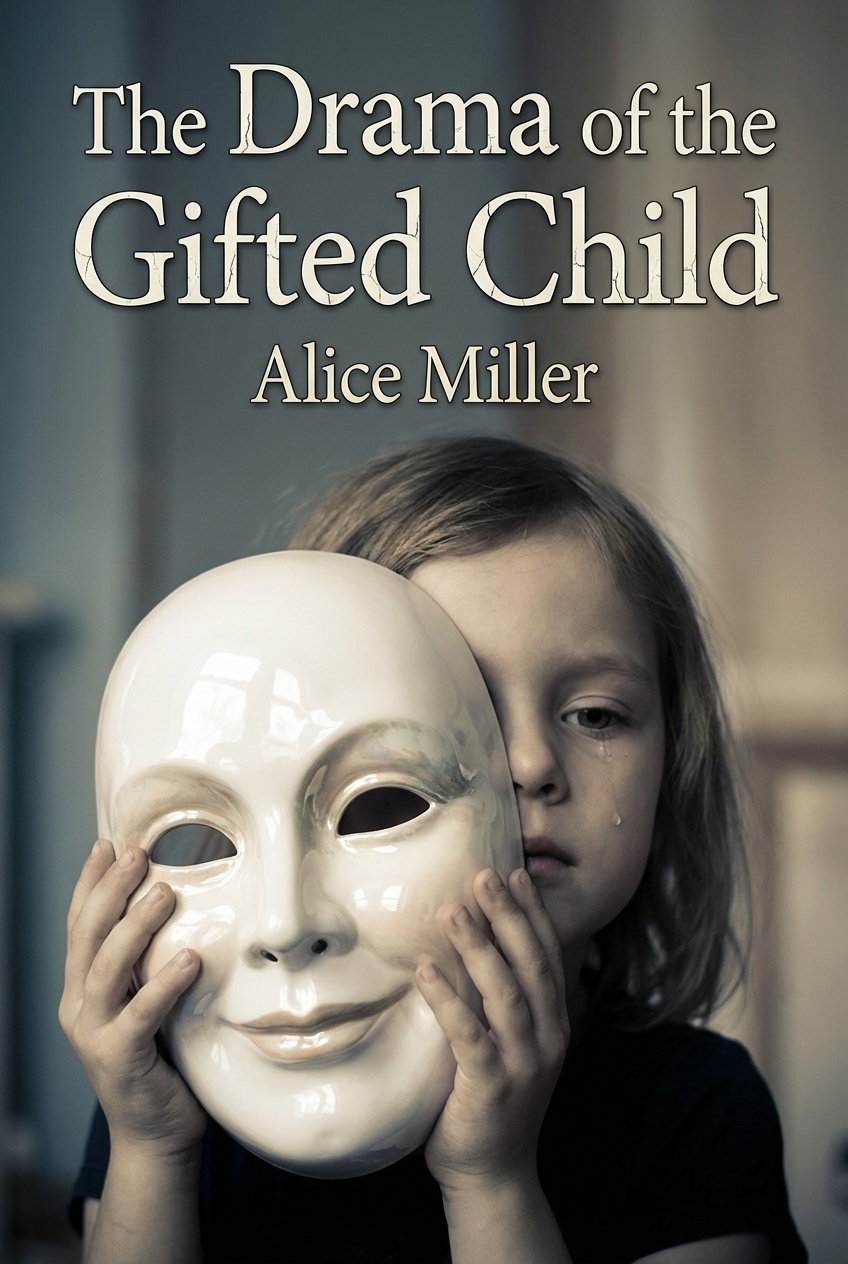
Why You should Read This Book?
This book reveals how outwardly successful individuals often harbor deep emotional wounds from childhoods where their true selves were sacrificed to meet parental expectations, creating a "false self." It offers profound insights into the origins of perfectionism, depression, and a pervasive sense of emptiness, even in those deemed "gifted" or high-achieving. Reading it provides a powerful path to understanding the roots of your own suffering, reclaiming your authentic self, and breaking cycles of emotional repression for true healing.
Listen to PodcastDialogue turns nonfiction books into engaging podcast mini-series between two hosts, making key ideas easy to absorb on the go. It uses science-backed learning techniques to strengthen memory formation and complements the book's insights with supporting scientific evidence.
This theme explores the foundational premise of the book: that many children who appear 'perfect' or highly attuned are actually surviving a specific type of emotional environment. It redefines 'giftedness' not as intellectual brilliance, but as an emotional survival skill used to manage the fragile egos of their caregivers.
In the context of this book, being 'gifted' does not refer to having a high IQ or being a prodigy in the arts. Instead, it refers to a child who possesses an incredibly high level of sensitivity and intuition regarding their parents' emotional states. These children are like emotional radars; they can sense exactly what their parents need, feel, or fear, often before the parents realize it themselves. Because they are so attuned, they learn very early on how to adjust their own behavior to keep the peace and ensure they receive care.
Many parents, often due to their own unhealed childhoods, unconsciously look to their children to provide the love, comfort, and validation they never received. The book describes a dynamic where the parent is the one who needs to be 'seen' and comforted, and the child takes on the role of the caretaker. The child becomes an extension of the parent—a mirror used to reflect the parent's ideal image back to them. The child is loved not for who they are, but for the function they serve in making the parent feel good.
To secure the love they desperately need, the child creates a 'False Self.' This is a mask of behavior that aligns perfectly with what the parents want. If the parent needs a quiet, obedient child, the child suppresses all energy and noise. If the parent needs a high achiever to brag about, the child becomes a perfectionist. The book illustrates this with the story of a patient who, as a toddler, learned to suppress her crying and instead offer comfort to her mother, effectively burying her own distress to ensure her mother didn't withdraw affection. The child learns that their 'bad' feelings (anger, sadness, neediness) threaten the relationship, so they hide them completely.
Because the child spends their entire life performing a role to please others, they eventually lose touch with their 'True Self.' They repress their authentic needs and emotions so deeply that they no longer know what they actually feel or want. This leads to a profound sense of inner emptiness. Even if they become successful adults, they feel like impostors because their entire life is built on a reaction to others' expectations rather than their own genuine desires. They are 'lived' by their defense mechanisms rather than living their own lives.
This section examines how the survival strategies of childhood mutate into psychological struggles in adulthood. It explains that depression and grandiosity are linked, both stemming from the repression of the true self and the continued search for the unconditional love that was missing in childhood.
When a person spends decades repressing 'negative' emotions like anger, jealousy, or sadness, they inadvertently numb their ability to feel 'positive' emotions like joy and spontaneity. The result is a flat, gray existence. The book argues that depression in these individuals is often the body's way of going on strike; it is the True Self signaling that it can no longer sustain the exhausting effort of maintaining the False Self. The 'lost world' refers to the rich, messy, vital emotional life that was sacrificed to be a 'good' child.
The book presents a compelling link between grandiosity (the constant need to be the best, admired, and successful) and depression. Both are reactions to a wounded sense of self. The grandiose person is terrified of the underlying feeling of worthlessness, so they constantly seek external validation to prop themselves up. The book shares the example of a successful patient who functions perfectly as long as the applause and achievements keep coming; however, the moment success falters or they are alone, they collapse into severe depression. The 'False Self' relies on external fuel; without it, the person feels they have no value.
Unresolved childhood pain often leaks out in self-destructive ways, such as addiction, eating disorders, or compulsive behaviors. In relationships, these adults often struggle to be intimate because intimacy requires vulnerability, and vulnerability was dangerous in their childhood. They may either isolate themselves to avoid being 'used' again, or they may cling to partners, hoping this new person will finally provide the unconditional parenting they missed. They are caught between the desperate need for love and the terrified fear of being engulfed by another person's needs.
A central tragedy described in the book is the adult's unconscious, repetitive search for a 'good mother' or 'good father' in their current life. They may look for this figure in a spouse, a boss, or a mentor, hoping that if they just perform well enough, this person will finally give them the acceptance they crave. This is a trap because no adult can fill the void left by a parent in childhood. The adult remains stuck in a cycle of hope and disappointment, trying to extract unconditional love from people who cannot provide it.
Create a free account to read the remaining themes and key concepts from this book.
Create an accountThis theme explains the mechanism of how trauma is passed down. It posits that parents who haven't dealt with their own childhood pain will inevitably inflict similar wounds on their children, not out of malice, but out of a compulsion to resolve their own unconscious history.
When a person who was emotionally starved as a child becomes a parent, they often unconsciously view their own child as a savior. They feel, 'Finally, here is someone who belongs to me, who will love me unconditionally, and who I can control.' The parent uses the child to satisfy their own hunger for love and attention. The child, sensing this need, complies. This reverses the natural order: instead of the parent giving to the child, the child gives to the parent.
Many people defend against the pain of their past by idealizing their parents and their childhoods. They insist, 'I had a happy childhood,' while simultaneously suffering from depression or anxiety. When they become parents, they project this denial onto their children. They cannot tolerate their child's unhappiness or anger because it threatens their own illusion of a 'perfect' world. They force the child to be happy and grateful, just as they were forced to be, preventing the child from expressing their true reality.
The book argues that we are compelled to repeat what we do not remember or process. If a parent was humiliated for crying as a child, they will likely feel an irrational rage when their own child cries. This reaction isn't about the child; it's a triggering of the parent's own repressed humiliation. By punishing the child, the parent is unconsciously trying to kill off that 'weak' part of themselves again. This ensures the trauma is stamped into the next generation.
This concept summarizes the generational flow of trauma. A wounded child becomes a wounded parent, who then wounds their own child. This cycle continues unbroken until someone in the line has the courage to stop, face their own pain, and refuse to pass it on. The book emphasizes that this is not about blaming parents, but about understanding the tragedy of the cycle so that it can finally be interrupted.
The final theme offers a roadmap for healing. It moves away from behavioral fixes and focuses on deep emotional work: confronting the past, grieving the loss, and slowly uncovering the authentic self that was buried for survival.
True healing requires a painful but necessary process of mourning. This means admitting that you were not loved in the way you needed to be, and that you can never go back and get that childhood. It involves feeling the immense sadness, rage, and despair that you were not allowed to feel as a child. The book stresses that intellectual understanding is not enough; you must emotionally experience the grief to release it. You have to mourn the loss of the 'ideal parents' you never had.
The therapeutic process is vital because it provides an 'Enlightened Witness'—usually a therapist—who can do what the parents could not: listen without judgment, validate the client's feelings, and not use the client for their own needs. This safe relationship allows the individual to dare to express their 'True Self.' By having their reality confirmed rather than denied, the person learns that their feelings are valid and that they are not 'crazy' or 'bad' for having them.
As the repression lifts, the inner emptiness is replaced by vitality. This doesn't mean life becomes perfect, but it becomes *real*. The individual begins to feel a full range of emotions—joy, anger, sadness, excitement—without guilt. They regain their spontaneity and creativity. The energy that was previously used to maintain the 'False Self' and suppress emotions is now available for living. They stop performing for an audience and start living from their own center.
The ultimate goal of this work is to become a conscious adult. By understanding the source of their pain, the individual stops projecting it onto others—whether that is their own children, their partners, or society. They take responsibility for their own inner child. This breaks the chain of trauma. A person who has mourned their own childhood is capable of respecting a child's feelings because they are no longer threatened by them. They can finally love others for who they are, not for what they can provide.
Hear the key concepts from this book as an engaging audio conversation.
Listen to Podcast