
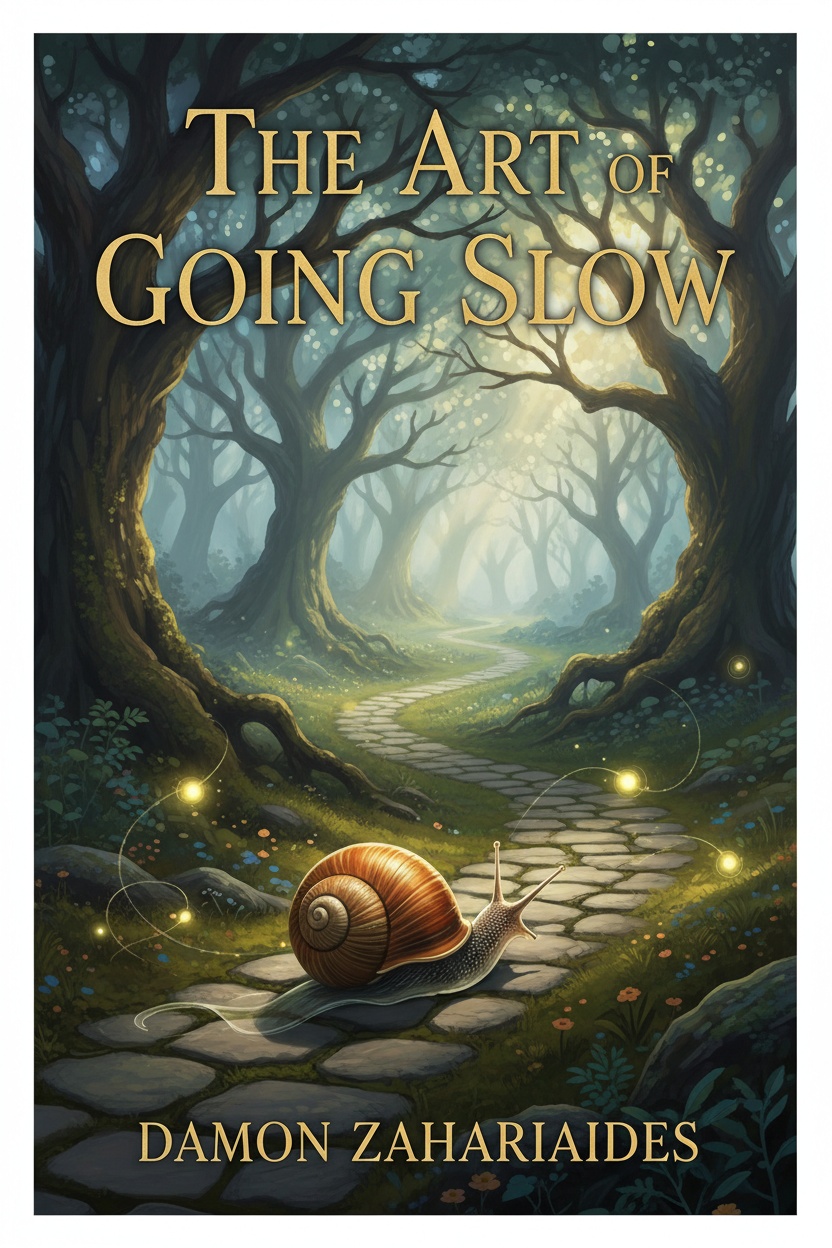
Why You should Read This Book?
This book is your essential guide to reclaiming time and peace in a world that constantly demands more from you. It provides actionable techniques to reduce overwhelm, improve focus, and make more intentional choices in your daily routine. By embracing its principles, you'll learn to work smarter, not harder, leading to greater productivity and a profound sense of well-being.
Listen to PodcastDialogue turns nonfiction books into engaging podcast mini-series between two hosts, making key ideas easy to absorb on the go. It uses science-backed learning techniques to strengthen memory formation and complements the book's insights with supporting scientific evidence.
This theme explores the societal pressure to constantly move faster and do more. It examines how we have conflated busyness with importance and how this obsession with speed is detrimental to our physical and mental well-being.
We live in a culture that treats exhaustion as a status symbol. The 'rise-and-grind' mentality pushes the narrative that if you aren't working every waking hour, you are falling behind. This ethos demands that we sacrifice sleep, hobbies, and downtime in the pursuit of professional success, convincing us that resting is a sign of weakness rather than a biological necessity.
Modern life is designed for speed. We get frustrated if a webpage takes two seconds to load or if the barista takes a minute too long with our coffee. This obsession creates a default state of 'hurry' where we rush through tasks not because we need to, but because we've forgotten how to move at a normal pace. We are constantly running to the next moment, never actually inhabiting the current one.
When we are trapped in the cult of speed, our perception of time warps. We feel like there is never enough time, which creates a scarcity mindset. Worse, we begin to tie our self-worth to our output. We start believing that we only matter if we are producing something, leading to a cycle where we work harder just to feel good about ourselves, yet never feel satisfied.
There is a hidden cost to the relentless pursuit of 'more'. While we might check more boxes, we often pay for it with our physical health, our relationships, and our peace of mind. We trade deep, meaningful connections for shallow interactions because we 'don't have time' for depth. We skim the surface of our own lives, missing the richness of the experience in exchange for the illusion of efficiency.
Burnout is the inevitable crash that comes from running on adrenaline for too long. It isn't just being tired; it is a state of emotional, physical, and mental collapse. **Book Story:** The author shares his own wake-up call when his obsession with productivity led to a severe health scare. He found himself physically collapsing, his body forcing him to stop because he refused to listen to the warning signs. This moment made him realize that his 'efficiency' was actually killing him.
This theme presents the counter-argument to the cult of speed. It outlines the tangible benefits of a slower lifestyle, arguing that slowing down is not about doing less, but about doing things better and enjoying the process.
Slowing down acts as a direct antidote to anxiety. When we rush, our bodies produce stress hormones like cortisol, keeping us in a 'fight or flight' mode. By deliberately lowering the pace, we signal safety to our nervous system. This reduces background anxiety, stabilizes our mood, and allows us to handle challenges with composure rather than panic.
It seems counterintuitive, but slowing down often leads to higher productivity. When we rush, we make mistakes, overlook details, and waste energy switching contexts. Slowing down allows for 'Deep Work'—focused, uninterrupted concentration that produces higher quality results in less time. You actually finish faster because you aren't wasting time fixing errors or recovering from distraction.
Relationships require time and presence to flourish. You cannot 'optimize' a conversation with a loved one or 'speed up' bonding. Slowing down gives you the patience to truly listen and be present with others. It signals to them that they are more important than your schedule, deepening trust and connection.
**Book Story:** The book references the classic parable of the Mexican Fisherman. A businessman urges a fisherman to catch more fish so he can buy boats, build a cannery, and eventually retire to... fish and relax. The fisherman points out he is already doing exactly that. This story illustrates that we often rush to achieve a future happiness that is already available to us if we just slow down enough to notice it.
A fast life is often a shallow life. We skim over experiences, conversations, and even our own meals. Slowing down allows us to live intentionally—to make conscious choices about how we spend our time rather than reacting to external demands. It shifts us from being a passenger in our own lives to being the driver.
Create a free account to read the remaining themes and key concepts from this book.
Create an accountThis theme addresses the common myths that prevent people from embracing a slower lifestyle. It clarifies what slow living actually means and debunks the fears associated with it.
The biggest myth is that slowing down means being lazy or doing nothing. In reality, slow living is about doing the *right* things with full attention. It takes more discipline to slow down and focus than it does to mindlessly rush around. It is not about checking out of life; it is about checking in more deeply.
FOMO drives much of our speed. We rush because we are terrified that if we slow down, opportunities will pass us by or others will get ahead. This fear keeps us in a state of hyper-vigilance, constantly scanning for the 'next big thing' while missing the reality right in front of us.
The book outlines five specific myths: 1) It's lazy. 2) It's only for the wealthy or retired. 3) It kills ambition and career growth. 4) You must move to the countryside to do it. 5) It is inefficient. The author systematically dismantles these, showing that slow living is a mindset available to anyone, anywhere, including ambitious professionals in cities.
This theme covers the first three steps of the author's framework. It focuses on self-awareness and auditing your current life to understand why you are rushing and what you actually want.
Before you can slow down, you must understand your biological and personality baseline. Are you an introvert who needs solitude to recharge, or an extrovert who gains energy from others? Do you naturally move fast or slow? Understanding your 'factory settings' helps you design a lifestyle that honors your energy levels rather than fighting against them.
Many of us rush toward goals we don't actually care about because we think we 'should' want them. This step involves a deep audit of your aspirations. Are you chasing a promotion because you want the job, or because you want the status? Slow living requires aligning your daily actions with your true values.
You cannot change what you do not measure. This step requires a rigorous time audit. Most people are terrible at estimating how they spend their day. By tracking every hour, you reveal the 'time leaks'—the hours lost to doom-scrolling, unnecessary meetings, or aimless fussing—that make you feel like you have no time.
Rushing is often a symptom of a deeper emotional issue. We might rush to avoid sitting alone with our thoughts, or to seek validation from others. Identifying the emotional root of your speed—whether it's insecurity, avoidance, or perfectionism—is crucial. Without fixing the root, you will just find new ways to be busy.
This theme covers Steps 4 and 5. It focuses on the practical actions of removing clutter from your schedule and mind to create the space necessary for a slower life.
You cannot slow down if your calendar is 110% full. This step is about ruthless elimination. It involves looking at your obligations and cutting everything that isn't essential or deeply fulfilling. It means quitting committees, declining invitations, and stepping back from projects that drain you.
Once you've cleared space, you must fill it with restorative practices. This isn't just 'zoning out' in front of the TV. It involves active relaxation techniques like meditation, deep breathing, or walking in nature. These activities physically lower your heart rate and train your brain to be comfortable with stillness.
The slow mindset shifts the focus from 'how much can I do?' to 'how well can I do this?'. It encourages doing fewer things but doing them with excellence and enjoyment. This applies to everything from the clothes you buy to the friendships you maintain. A few deep connections are worth more than a hundred shallow acquaintances.
To protect your slower pace, you must become an expert at saying 'no'. This is the boundary that keeps the world's demands from flooding your life. Saying no isn't selfish; it's a necessary act of self-preservation. It protects your time for the things you actually said 'yes' to.
This theme covers Steps 6 and 7. It focuses on building specific daily habits that anchor the slow mindset and protecting your attention from the modern world's biggest distraction: digital noise.
To make the lifestyle stick, you need a daily ritual that embodies slowness. This is a small, consistent act performed deliberately slowly to remind you of your intention. It could be making coffee from scratch, gardening, or a slow morning stretch. This habit serves as an anchor, resetting your pace every day.
Our devices are the primary enemies of slow living. They bombard us with notifications, demands, and information at a speed our brains cannot process. This step involves curating your digital environment: turning off notifications, unsubscribing from emails, and curating your social media feeds to reduce the volume of information hitting your brain.
Beyond just managing settings, you need periods of total disconnection. This might mean 'phone-free bedrooms,' 'offline Sundays,' or specific hours of the day where the internet is off-limits. These breaks break the dopamine loop and allow your brain to reset to its natural rhythm.
Technology should be a tool you use, not a master that uses you. This concept is about shifting from passive consumption (mindless scrolling) to active utility. It means deciding when to look at your phone rather than responding to every beep like a Pavlovian dog.
This theme covers Steps 8, 9, and 10. It focuses on the internal shifts and maintenance practices required to keep the slow lifestyle alive: how we talk, how we think, and how we review our progress.
Slow living extends to how we speak and listen. Intentional communication means listening to understand, not just to reply. It involves pausing before speaking, avoiding gossip, and being fully present in conversations. It transforms social interactions from draining obligations into nourishing exchanges.
Speed focuses on what we lack or what we need to get next. Slowness focuses on appreciating what is already here. Gratitude rewires the brain to scan for the positive, reducing the urge to rush toward 'more.' It grounds you in the present moment and fosters contentment.
Life naturally speeds up if we don't watch it. The weekly review is a scheduled meeting with yourself to assess your pace. You look at what went well, where you rushed, and what needs to change for the coming week. It is the course-correction mechanism that keeps you on the slow path.
The rush is often driven by a scarcity mindset—the belief that there isn't enough time, money, or success to go around. Slow living adopts an abundance mindset: there is enough time for what truly matters. This shift reduces the panic-induced need to hoard experiences or achievements.
This theme applies the slow philosophy to the professional and intellectual spheres. It challenges the modern workplace's obsession with speed and offers strategies for working deeper and learning better.
A career is a marathon, not a sprint. Trying to advance too quickly often leads to burnout or climbing the wrong ladder. This concept encourages taking a long-term view, focusing on sustainable growth, and valuing work-life balance over rapid promotion. It suggests that sometimes, the best career move is to pause or lateral move to preserve your well-being.
Based on Cal Newport's concept, this involves working for long, uninterrupted stretches on cognitively demanding tasks. By slowing down and removing distractions, you achieve a state of flow. You produce higher quality work in less time than if you were frantically multitasking.
In the information age, we tend to 'binge' information—skimming articles, listening to podcasts at 2x speed, and consuming without digesting. Slow learning prioritizes deep understanding over wide consumption. It's better to read one book and master it than to skim ten and remember nothing.
We are addicted to the dopamine hit of checking off boxes. This concept asks us to let go of 'Inbox Zero' as the ultimate goal. It reframes success from 'volume of tasks completed' to 'impact of tasks completed.' It accepts that the to-do list will never be empty, and that is okay.
This theme explores how slowing down transforms our interactions with others. It emphasizes presence, boundaries, and the nurturing of genuine connection over social obligation.
Relationships are like plants; they need regular, slow watering to grow. Rushing through social interactions leaves them withered. This concept encourages setting aside unstructured time to just 'be' with people, without an agenda or a time limit.
Presence is the greatest gift you can give. It means being fully in the room, not half in the room and half on your phone or worrying about work. It involves making eye contact and engaging with the emotional state of the other person.
To have time for your loved ones, you must protect your time from the rest of the world. This involves setting clear limits on work hours, social obligations, and energy vampires. Boundaries are the fence that allows your garden of relationships to grow safely.
Much of our 'busyness' is actually self-manufactured drama or involvement in other people's crises. Slow living involves stepping back from toxic urgency and refusing to be drawn into chaos that doesn't concern you. It prioritizes peace over the excitement of drama.
This theme looks at how slowness affects physical health and decision making. It argues that a slower approach to eating and deciding leads to better health outcomes and smarter choices.
Quick-fix diets and 10-minute intense workouts often lead to injury or yo-yo results. A slow approach to health focuses on consistency and sustainability. It values long-term lifestyle changes over rapid transformations.
We often shovel food into our mouths while watching TV or working, barely tasting it. Mindful eating involves slowing down the physical act of eating. It improves digestion, prevents overeating (because you notice when you're full), and turns a meal into a pleasurable experience.
Rushed decisions are often poor decisions, driven by emotion or pressure. Slowing down the decision-making process allows you to gather facts, weigh options, and consult your intuition. It prevents the regret that comes from impulsive choices.
We have a limited amount of willpower each day. Making hundreds of tiny decisions wears us down. Slow living involves automating or simplifying routine choices (like what to wear or eat) so you have the mental energy for the decisions that actually matter.
The final theme focuses on the long game. It discusses how to design a life that supports slowness permanently, rather than treating it as a temporary detox.
Willpower fails; systems work. To maintain a slow life, you need routines that make slowness the default. This includes morning rituals that start the day calm and evening rituals that wind it down. These routines act as guardrails against the chaos of the world.
Going slow is not a one-time fix; it is a continuous practice. There will be times when life speeds up (crises, deadlines). The goal is not to be perfect, but to recognize when you've sped up and gently correct course. It requires self-compassion and persistence.
Ultimately, the goal of going slow is to build a life that feels good on the inside, not just one that looks good on the outside. It is about curating a life full of meaningful moments, deep connections, and personal satisfaction. It defines wealth not by money, but by time and autonomy.
The world is designed to distract you and speed you up. Going slow is an act of rebellion. It is reclaiming your agency to decide how you live. It empowers you to step off the hamster wheel and walk your own path, regardless of what society dictates.
Hear the key concepts from this book as an engaging audio conversation.
Listen to Podcast