
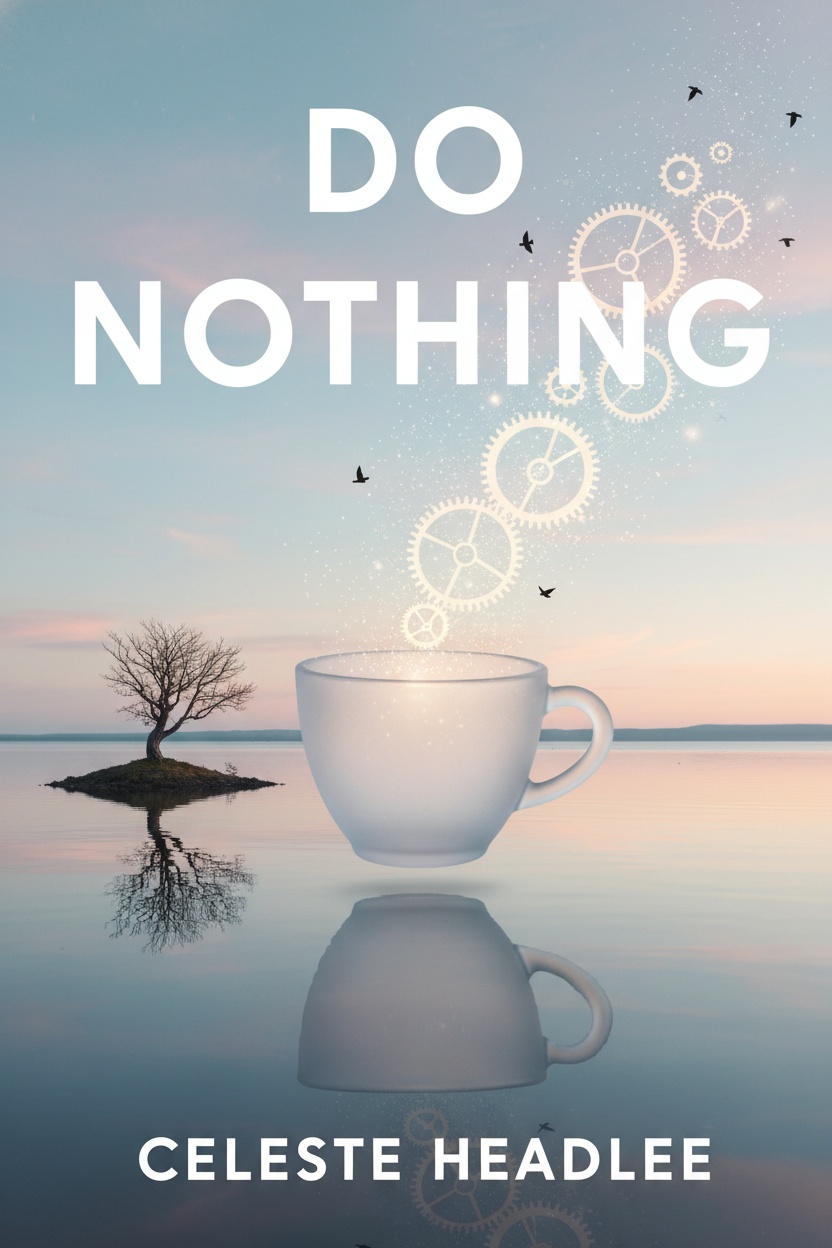
Why You should Read This Book?
This book dissects the harmful myth that constant productivity equals success, revealing how our obsession with busyness leads to burnout. It offers a crucial counter-narrative, showing readers how to reclaim their time and value themselves beyond their output. Read it to break free from the exhausting cycle of hustle culture and discover a more balanced, fulfilling life.
Listen to PodcastDialogue turns nonfiction books into engaging podcast mini-series between two hosts, making key ideas easy to absorb on the go. It uses science-backed learning techniques to strengthen memory formation and complements the book's insights with supporting scientific evidence.
Modern culture is trapped in what Celeste Headlee calls the 'cult of efficiency,' a pervasive belief system that equates busyness with personal worth and productivity with success. This mindset pushes us to optimize every moment, viewing any downtime as wasted potential and a source of guilt. We are driven by a relentless need to accomplish more, faster, believing this is the path to a better life. However, this obsession is counterproductive. It leads to burnout, anxiety, and a diminished quality of life, transforming our existence into a frantic race to check off tasks rather than a meaningful journey.\n\nThe book argues that this constant drive for efficiency is a relatively recent development in human history and is fundamentally at odds with our natural rhythms. We've been conditioned to believe that exhaustion is a status symbol and that a packed schedule signifies importance. This toxic cultural narrative ignores the reality that true productivity, creativity, and well-being are not born from relentless activity but from a balance of focused effort and genuine rest. By constantly striving for more, we ironically achieve less of what truly matters: happiness, health, and deep connections with others.
In our current cultural landscape, a packed schedule and visible signs of overwork are often treated as badges of honor. Society has created a narrative where being 'busy' is synonymous with being important, successful, and morally upright. This creates immense pressure to constantly be 'doing,' as idleness is often stigmatized as laziness or a lack of ambition. This equation of busyness with self-worth is a primary driver of burnout and anxiety, as people feel compelled to take on more than they can handle to maintain a certain social standing. The glorification of 'hustle culture' reinforces the idea that sacrificing personal well-being, relationships, and leisure for work is not only acceptable but admirable.\n\nThis mindset turns our lives into a performance of productivity. We feel the need to signal our dedication by working long hours, answering emails at all times, and filling our free time with 'productive' hobbies. According to Headlee, this is a deeply unhealthy and unsustainable way to live. It shifts our focus from the actual quality and meaning of our work to the mere appearance of being constantly engaged. This cultural obsession with busyness leads to a collective neglect of essential human needs like rest, social connection, and unstructured time, ultimately making us less happy and, ironically, less genuinely productive in the long run.
The concept of multitasking, while popular, is a neurological impossibility. Our brains are not designed to focus on multiple complex tasks simultaneously. Instead of multitasking, we are actually 'task-switching,' rapidly toggling our attention between different activities. This process is cognitively expensive; it takes mental energy to disengage from one task and re-engage with another, leading to a significant drop in performance and efficiency. Studies show that this constant switching can damage our cognitive processes and even decrease brain density. The result is that we make more errors, take longer to complete tasks, and retain less information than if we had focused on one thing at a time.\n\nHeadlee points out that the myth of multitasking is particularly detrimental in the modern workplace, where constant notifications and the expectation of immediate availability encourage this fragmented way of working. While we may feel like we are accomplishing more by juggling emails, messages, and our primary work, the reality is that the quality of our output suffers. This approach to work increases stress levels because our brains are being pushed to operate in a way that is inefficient and unnatural. True productivity comes from deep, focused work, which is impossible to achieve when our attention is continuously divided.
While technology is often marketed as a tool to save us time and increase efficiency, it has paradoxically created a sense of 'time scarcity.' Devices like smartphones and laptops blur the lines between work and personal life, making it possible to be 'on the clock' 24/7. This constant connectivity generates an implicit expectation of immediate availability, where we feel pressured to respond to emails, messages, and notifications at all hours. This phenomenon, known as 'polluted time,' means that even during our off-hours, our minds are still tethered to work, preventing us from ever truly disconnecting and resting.\n\nHeadlee argues that technology itself isn't the villain, but it acts as an amplifier for our pre-existing societal addiction to productivity. Digital tools are designed to be addictive and they feed our desire to feel busy and productive, even when the tasks we are performing are trivial. The feeling of being overworked is very real, even if we aren't logging more hours, because the mental load of being perpetually available increases our stress and prevents genuine recuperation. This constant digital tethering fragments our attention and keeps us in a state of low-grade anxiety, making it incredibly difficult to engage in the kind of deep thought or restorative leisure that is essential for well-being.
Our modern obsession with work and productivity is not an inherent part of human nature but a learned behavior with specific historical roots. Celeste Headlee traces this mindset back to key shifts in society, particularly the Industrial Revolution. Before this period, the rhythm of work was often seasonal and task-oriented, with ample time dedicated to leisure, festivals, and community life. Even medieval peasants, for example, worked fewer hours annually than the average modern office worker. The book explains how our relationship with time, labor, and identity became fundamentally altered by economic and cultural pressures that emerged over the last few centuries.\n\nThese historical developments have embedded the idea that work is not just a means of survival, but the central, defining aspect of a person's life and moral character. We have inherited a cultural legacy that glorifies relentless effort and stigmatizes idleness, a perspective that was not shared by our ancestors. Understanding that our current 'hustle culture' is a relatively recent and unnatural development is the first step toward questioning its validity and reclaiming a more balanced, humane approach to life and work.
The Industrial Revolution marked a fundamental turning point in humanity's relationship with time. Before factories, time was often measured by natural cycles like the sun and seasons, and work was typically task-based. However, the advent of factory work and hourly wages transformed time into a commodity—a resource to be bought, sold, and maximized for profit. For the first time, people began to 'punch a clock,' and every hour was assigned a monetary value. This created the powerful and persistent equation: time is money.\n\nThis shift had profound psychological consequences. If time is money, then any time not spent in productive labor could be framed as a financial loss. Leisure, which was once an integral part of life, began to be seen as idleness or wasted potential. This new mindset fostered a sense of anxiety about 'wasting time' and instilled a cultural imperative to be efficient and productive at all moments. We have inherited this legacy, which fuels the modern guilt we often feel when we are not actively working or engaging in some form of self-improvement, even when we are supposed to be resting.
Beyond the economic shifts of the Industrial Revolution, our obsession with work has deep cultural and religious roots. Headlee highlights the influence of the Protestant work ethic, which promoted the idea that hard work is an inherently virtuous activity and a sign of moral righteousness. This belief system framed diligent labor as a calling and suggested that success and wealth were signs of divine favor, while idleness was associated with sin. This ethic became deeply intertwined with the rise of capitalism, providing a moral justification for the relentless pursuit of productivity and profit.\n\nThis historical glorification of overwork has been passed down through generations and remains a powerful, often unconscious, force in modern society. It contributes to the widespread feeling of guilt associated with taking breaks or enjoying leisure. We have been culturally conditioned to believe that productivity is a measure of our character. This mindset was further amplified by narratives like the 'American Dream,' which promised that anyone could achieve success through sheer diligence and perseverance, reinforcing the idea that grueling hours were a necessary and noble part of the path to prosperity.
In many pre-industrial societies, work was primarily a means to an end—a way to secure food, shelter, and the necessities of life. A person's identity was more likely to be defined by their family, community, faith, or craft. However, in the modern era, work has increasingly become the primary source of personal identity. When we meet someone new, one of the first questions we ask is, 'What do you do?' This reflects a cultural shift where our profession is seen as the most important descriptor of who we are.\n\nThis fusion of work and identity is problematic because it makes us incredibly vulnerable to the pressures and uncertainties of the professional world. If our self-worth is tied to our job title or our productivity levels, then professional setbacks, layoffs, or retirement can trigger a profound identity crisis. It also fuels the obsession with work, as we feel compelled to constantly achieve more to feel good about ourselves. Headlee argues that this is an unhealthy and fragile foundation for self-esteem. A fulfilling life requires a multifaceted identity, where our sense of self is drawn from a variety of sources, including our relationships, hobbies, values, and community involvement, not just our professional output.
Create a free account to read the remaining themes and key concepts from this book.
Create an accountThe relentless pursuit of productivity and the glorification of busyness come at a steep price. Celeste Headlee argues that an overworked life is not a successful one; it is a depleted one. The constant pressure to do more leads to a host of negative consequences that affect our mental, physical, and social well-being. Chronic stress from overwork is a major contributor to numerous health problems, and the feeling of being constantly overwhelmed fuels anxiety and burnout.\n\nFurthermore, our obsession with efficiency erodes the very things that make life meaningful. We begin to treat human interactions as transactions to be optimized, rather than connections to be nurtured. This leads to a sense of loneliness and social isolation, even in a hyper-connected world. The book makes it clear that the societal narrative promoting overwork is not just flawed, but actively harmful, pushing us toward lives that are less healthy, less happy, and ultimately less human.
A lifestyle built around constant busyness keeps our bodies and minds in a perpetual state of high alert. This chronic activation of the stress response system has been linked to a wide range of health issues, from heart disease to weakened immune function. Mentally, the pressure to always be productive and the feeling of never having enough time contribute directly to anxiety, exhaustion, and burnout. We lose the ability to be present and enjoy the moment because our minds are always racing ahead to the next task on our to-do list. This frantic pace of life is simply not sustainable for our long-term health.\n\nThis relentless focus on 'doing' also pushes us toward social isolation. When every moment is scheduled and optimized for productivity, there is little room left for spontaneous social interaction or the deep, unhurried conversations that build strong relationships. We might cancel plans with friends to get more work done or find ourselves too exhausted for meaningful connection at the end of the day. As a result, even as we become more 'productive' in our professional lives, we may find ourselves becoming increasingly lonely and disconnected from the people who matter most.
When we adopt an efficiency-first mindset, we start applying it to all areas of our lives, including our relationships. Human connection, however, is inherently inefficient. It requires time, presence, vulnerability, and unhurried conversation—things that cannot be hacked or optimized. Headlee argues that our obsession with productivity causes us to devalue these essential interactions. We might rush conversations, multitask while talking to loved ones, or prioritize networking over genuine friendship. This transactional approach to relationships leaves us feeling hollow and disconnected.\n\nMeaningful social connection is not a luxury; it is a fundamental human need, essential for our mental and emotional health. Research consistently shows that strong social ties are one of the most important predictors of happiness and longevity. By constantly prioritizing work and efficiency, we are systematically depriving ourselves of this vital source of well-being. The book presents a powerful story about the town of Roseto, Pennsylvania, a close-knit immigrant community that, in the mid-20th century, had remarkably low rates of heart disease. Researchers concluded their exceptional health was not due to diet or genetics, but to their deep social bonds and community-oriented lifestyle. This illustrates that our health is profoundly linked to the quality of our social lives, which our modern work culture actively undermines.
Social media platforms act as a powerful accelerant for the culture of overwork. They present a curated highlight reel of other people's lives, creating a distorted reality where everyone else appears to be constantly achieving, creating, and succeeding. This endless stream of professional milestones, perfect vacations, and 'productive' hobbies fuels a toxic cycle of social comparison. We inevitably measure our own lives against these idealized versions and often feel like we are falling short, which amplifies the pressure to do more and be more.\n\nThis constant comparison can be devastating for our self-worth, tying it to external validation and the performance of productivity. We feel compelled not only to be productive but to publicly display our productivity for others to see. Headlee argues that this creates a feedback loop of anxiety and inadequacy. Instead of finding contentment in our own lives, we get caught up in a competitive game of keeping up appearances. This digital pressure cooker makes it even harder to embrace rest and 'do nothing,' as any moment of idleness can feel like a failure when we see others seemingly 'hustling' 24/7.
In a culture that demonizes idleness, Celeste Headlee makes a compelling, science-backed case for the profound importance of true rest. The book dismantles the myth that 'doing nothing' is a waste of time, revealing it instead as a critical activity for our brains and overall well-being. True leisure is not simply the absence of work; it is an active state of restoration that allows for creativity, problem-solving, and mental clarity. It is during these moments of unstructured downtime that our minds are able to make novel connections and generate our best ideas.\n\nHeadlee explains the neuroscience behind why our brains require periods of unfocused thought to function optimally. By constantly filling every spare moment with stimulation, whether from work or digital devices, we are depriving ourselves of an essential cognitive process. The book champions a redefinition of rest, moving it from the category of lazy indulgence to a non-negotiable component of a productive, healthy, and meaningful life.
Our society tends to conflate idleness with laziness, attaching a negative moral judgment to unstructured, non-productive time. Headlee argues this is a profound misunderstanding. Leisure and moments of idleness are not a sign of sloth but a prerequisite for high-level thinking, creativity, and psychological health. When we allow our minds to wander without a specific goal, we tap into a different mode of thought that is crucial for insight and innovation. Many of history's greatest thinkers, like Charles Darwin, had breakthrough ideas not while chained to a desk, but while walking or engaging in leisurely pursuits.\n\nThis is because a rested, unfocused mind is better at connecting disparate ideas and seeing the bigger picture. Constant, focused work keeps our brains in a narrow, analytical mode, which is important for executing tasks but poor for generating novel solutions. True creativity requires us to step back and let our subconscious do the work, which can only happen when we give ourselves permission to be idle. Embracing leisure is therefore not about avoiding work, but about creating the mental conditions necessary to do our best work and live a more fulfilling life.
Not all non-work time is created equal. Headlee emphasizes the critical distinction between true leisure and what we often call 'spare time.' Spare time is frequently filled with passive consumption or low-effort activities that don't truly restore us, such as scrolling through social media, binge-watching TV, or running errands. While these activities provide a temporary distraction from work, they often leave us feeling just as drained and unfulfilled as before. They keep our minds occupied but not genuinely rested.\n\nTrue, restorative leisure, on the other hand, is an active and engaging pursuit chosen for its own intrinsic enjoyment, not for any external goal or outcome. This could be a hobby like painting, playing a musical instrument, gardening, or engaging in a sport. The key is that the activity is done for its own sake—because it brings you joy, not because you're trying to monetize it, post about it on Instagram, or add a skill to your resume. This type of leisure fully absorbs our attention in a positive way, allowing our minds to recover from the stresses of work and daily life. It is this quality of leisure that truly recharges our batteries and contributes to our overall well-being.
When we are not focused on a specific, goal-oriented task, our brain's 'default mode network' (DMN) becomes active. Headlee explains that this neural network is far from idle; it is a critical hub of brain activity associated with processes like self-reflection, memory consolidation, understanding others, and imagining the future. When we allow our minds to wander, daydream, or simply be at rest, the DMN gets to work, making sense of our past experiences, planning for what's to come, and generating creative insights. It is the neurological basis for why our best ideas often come to us in the shower or on a long walk.\n\nIn our modern, hyper-stimulated world, we are constantly engaged in focused tasks, whether it's working on a spreadsheet, answering emails, or scrolling through a newsfeed. This state of perpetual focus keeps the DMN suppressed, robbing us of its significant benefits. By never allowing our brains to enter this default state, we hinder our ability to learn effectively, think creatively, and develop a coherent sense of self. True downtime is not just about relaxing; it is a biological necessity for a healthy, functioning mind.
Recognizing the problems of overwork is the first step, but Celeste Headlee's "Do Nothing" is ultimately a practical guide to reclaiming a more balanced and fulfilling life. The book offers concrete strategies to help readers break free from the cult of efficiency and cultivate a healthier relationship with work, time, and themselves. These strategies are not about abandoning ambition or responsibility, but about working smarter, not harder, and redefining success in more human terms. The core message is that by being more intentional about how we spend our time and energy, we can achieve more of what truly matters while feeling less stressed and overwhelmed.\n\nThis involves a fundamental shift in mindset, moving away from a constant focus on productivity and toward a focus on purpose and well-being. It requires us to consciously design our lives to include ample time for the things that truly sustain us: genuine rest, meaningful connection, and joyful leisure. The book provides a roadmap for pushing back against societal pressures and creating a personal culture that values humanity over hustle. A powerful story shared in the book is about a group of tech workers in Silicon Valley who, despite their high-pressure jobs, formed a 'slow-tech' club. They met regularly to engage in activities like knitting and woodworking, deliberately choosing tactile, non-digital hobbies to counteract their screen-heavy work lives. This small act of rebellion against the prevailing culture helped them reduce stress and find a greater sense of balance.
In our obsession with productivity, we often get trapped in focusing on 'means goals'—the endless tasks, to-do lists, and metrics of output. We become so concerned with checking boxes and being efficient that we lose sight of the 'end goal': the reason we are doing all this work in the first place. Headlee urges readers to step back and ask themselves what their ultimate ambition is. For most people, the end goal is not to answer the most emails or work the most hours; it is to live a happy, healthy, and meaningful life.\n\nWhen we keep the end goal in mind, it becomes easier to make decisions about how to spend our time. We can evaluate tasks and commitments based on whether they truly contribute to our ultimate well-being, rather than just accepting them as part of the grind. This perspective helps us prioritize what is genuinely important and let go of the rest. Focusing on the ends rather than the means reduces stress because it allows for flexibility; if one path doesn't work, we can find another way to reach our goal of a good life. It transforms our perspective from that of a hamster on a wheel to that of an architect intentionally designing a life of purpose.
In a world that defaults to busyness, leisure will not happen by accident; it must be intentionally planned and protected. Headlee advises treating leisure and social time with the same importance as work meetings. This means scheduling it in your calendar and committing to it. This act of scheduling helps to legitimize rest and ensures that it doesn't get constantly pushed aside by more 'urgent' tasks. It is a conscious act of rebellion against the culture that tells us every moment should be productive.\n\nAn essential part of quality leisure is disconnecting from digital devices. Our phones and computers keep us tethered to the world of work and endless stimulation, preventing our brains from truly resting. To reap the full restorative benefits of leisure, we need to create screen-free time where we can be fully present in our chosen activity. This could involve having one 'untouchable' day per week where you don't check email or social media, or simply putting your phone in another room while you engage in a hobby. Investing in this kind of disconnected leisure is one of the most effective ways to combat burnout and recharge your mental and creative energy.
The culture of overwork thrives on isolation, but humans are fundamentally social creatures who thrive on connection. Headlee identifies investing in genuine, real-world relationships as a powerful antidote to the pressures of modern work life. While digital communication has its place, it cannot replace the richness and nuance of face-to-face interaction. Meaningful social connection is a core component of well-being and a key buffer against stress and burnout.\n\nCultivating these connections requires a conscious investment of time and energy—two resources that our work-obsessed culture constantly tries to claim. This means making time for friends and family a non-negotiable priority. It involves choosing to have a deep conversation with a friend over scrolling through a social media feed or answering one more email. By prioritizing our social lives, we build a strong support system and a sense of belonging that provides the resilience needed to navigate the demands of our professional lives. These relationships provide a source of identity and self-worth that is independent of our work, creating a more stable and fulfilling life.
Contrary to the belief that more hours equal more output, research shows that human beings can only maintain deep focus for a limited period, typically around an hour at a time. After that, our performance begins to decline. Headlee advocates for a more intelligent approach to work: structuring our days around short, highly focused bursts of effort, followed by genuine breaks where we completely disconnect from the task. This method respects our natural cognitive rhythms and leads to higher quality work in less time.\n\nThis strategy is based on Parkinson's Law, the adage that work expands to fill the time allotted for its completion. When we have an entire day to complete a task, we tend to work less efficiently. However, when we give ourselves a shorter, defined block of time, we are forced to focus and eliminate distractions. The breaks between these focused sessions are just as important as the work itself. They allow our brains to rest and recharge, preventing the mental fatigue that leads to errors and burnout. By working in this pulsed rhythm of intense effort followed by complete rest, we can often accomplish more in a shorter workday than we would by trying to power through for eight or ten straight hours.
Hear the key concepts from this book as an engaging audio conversation.
Listen to Podcast