
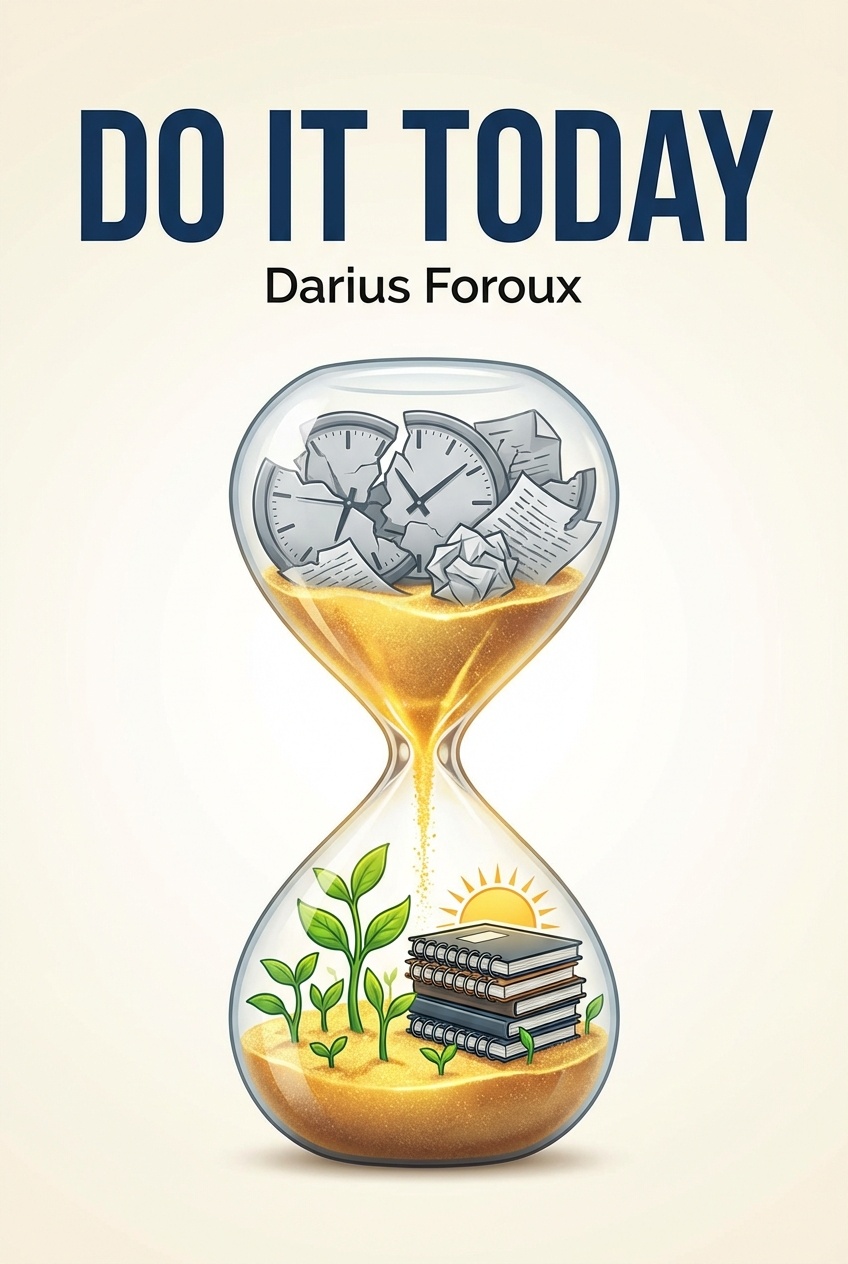
Why You should Read This Book?
This book offers a refreshingly direct and practical approach to conquering procrastination and building a habit of action. It provides actionable strategies and a powerful mindset shift to help you overcome overwhelm and simply start doing what needs to be done, today. Read it to stop delaying, gain momentum, and consistently turn your intentions into tangible results.
Listen to PodcastDialogue turns nonfiction books into engaging podcast mini-series between two hosts, making key ideas easy to absorb on the go. It uses science-backed learning techniques to strengthen memory formation and complements the book's insights with supporting scientific evidence.
This theme explores the underlying reasons why we delay important tasks and challenges the misconception that procrastination is simply a result of laziness or poor time management. It posits that the real barriers are emotional and psychological. By understanding the internal resistance we face, we can deconstruct the habits that hold us back and replace them with a bias toward action.
Many people mistakenly believe they procrastinate because they are lazy or disorganized, but the book argues that the root cause is often emotional regulation. We delay tasks to avoid negative feelings like anxiety, insecurity, or the fear of failure. Perfectionism acts as a major roadblock because the pressure to do something flawlessly makes the task feel overwhelming, causing us to retreat to safer, easier activities to protect our ego.
It is common to hear people say, 'I am just a procrastinator,' as if it were a permanent part of their DNA. The book reframes procrastination as a habit—a learned behavior that has been reinforced over time. Because it is a habit loop (cue, routine, reward), it can be unlearned. By recognizing that this is a behavioral pattern rather than a character flaw, you gain the power to rewire your brain for productivity.
Waiting for the perfect time, the perfect plan, or the perfect mood is a trap that leads to stagnation. The book emphasizes that action is the cure for fear. Taking a small, imperfect step creates momentum, which is far more valuable than a perfect plan that never gets executed. Action clears the mental fog and anxiety that accumulates when we sit still and overthink.
A crucial step in overcoming procrastination is accepting total responsibility for your life. Blaming external circumstances, the weather, or other people for your lack of progress is a way to surrender control. When you take ownership, you acknowledge that while you cannot control everything that happens to you, you have absolute control over how you respond and whether you choose to work or delay.
This theme focuses on the internal software required for productivity. It moves beyond simple tips and tricks to address the mental frameworks that dictate how we approach our days. A proactive mindset involves shifting from a passive state—where life happens to you—to an active state where you dictate your focus, manage your energy, and view obstacles as necessary steps in the learning process.
The phrase 'I'll do it later' is deceptive because 'later' is an undefined time that rarely arrives. The book encourages a radical shift in self-talk to 'I'll do it now.' This does not mean doing everything at once, but rather developing an instinct for immediate execution on essential tasks. This shift reduces the mental burden of carrying unfinished tasks in your subconscious, freeing up mental energy.
People with a fixed mindset avoid challenges because they fear that failure proves they aren't smart or capable. In contrast, the book advocates for a growth mindset, where effort and difficulty are seen as the path to mastery. When you view failure as data rather than a verdict on your worth, you become willing to take the risks necessary for high productivity and success.
We often obsess over time management—scheduling every minute of the day—but the book argues that time is irrelevant if you lack focus. You can sit at a desk for eight hours (time), but if you are distracted by emails and social media, you achieve nothing. Managing attention means protecting your mental energy and focus from the constant barrage of interruptions in the modern world.
Productivity is not a straight line; life will inevitably throw curveballs that disrupt your plans. Mental resilience is the ability to absorb these shocks without falling apart or giving up entirely. The book suggests adopting a philosophy of pragmatism and emotional stability, ensuring that one bad day or one rejected project doesn't spiral into a month of inactivity.
Create a free account to read the remaining themes and key concepts from this book.
Create an accountThis theme transitions from mindset to mechanics. It provides specific, tactical methods for organizing work and executing tasks. These strategies are designed to bypass the need for superhuman willpower by creating structures and rules that make productivity the path of least resistance. The focus is on simplifying the workflow to ensure consistent output.
This is a simple heuristic to prevent small tasks from piling up and becoming a source of stress. The rule states that if a task takes less than two minutes to complete—such as replying to a quick email, washing a dish, or filing a document—you should do it immediately rather than putting it on a to-do list. This keeps your list reserved for significant projects and keeps your mind clear of 'micro-tasks.'
Multitasking is a myth that destroys productivity. The book recommends Time Blocking, where you dedicate specific chunks of time to a single task, and the Pomodoro Technique, which involves working in focused intervals (usually 25 minutes) followed by short breaks. These techniques create artificial urgency and allow for deep focus, preventing the day from slipping away in a blur of shallow work.
Relying on motivation is a strategy for failure because motivation is fickle and fleeting. The book argues for building systems—routines and environments that make working automatic. Instead of hoping you feel like working out, you build a system where your gym clothes are laid out the night before and you go at the same time every day. Systems remove the need for daily decision-making.
Productivity is often mistakenly viewed as doing more things, but the book suggests it is actually about doing the *right* things. This requires ruthless elimination of non-essential activities. By saying 'no' to low-value obligations, social media scrolling, and busywork, you reclaim the time and energy needed for the few things that actually matter.
The final theme broadens the scope from daily productivity to life satisfaction. It emphasizes that the ultimate goal of 'doing it today' is not just to be a robot that churns out work, but to build a life of freedom, meaning, and continuous improvement. It connects the micro-actions of the day to the macro-vision of a life well-lived, stressing consistency over intensity.
The book illustrates the concept of consistency through the 'Seinfeld Strategy.' The story goes that comedian Jerry Seinfeld used a wall calendar to track his writing. Every day he wrote a joke, he put a big red 'X' on that day. After a few days, he had a chain. His only goal was: 'Don't break the chain.' This visual representation emphasizes that small, daily actions compound into massive results over time, whereas sporadic bursts of intense effort often lead to burnout.
Productivity is useless if you are moving in the wrong direction. The book stresses the importance of ensuring your daily grind aligns with what you actually want, using the story of the Mexican Fisherman. An investment banker advises a fisherman to expand his business so he can eventually make millions and retire to 'sleep late, fish a little, and play with his kids.' The fisherman replies that he already does exactly that. The lesson is to ensure your ambition doesn't destroy the very life you are trying to build.
To ensure long-term growth, the book advises focusing on 'universal skills'—competencies that are valuable regardless of the economy or your specific job title. These include writing, persuasion, emotional intelligence, and physical fitness. Unlike technical skills which may become obsolete, investing time in these fundamental areas provides a high return on investment for the rest of your life.
The book concludes by challenging the reader to reject the standard definition of success (money, fame, status) if it doesn't resonate with them. True productivity is about designing a life that makes you happy and fulfilled. This requires introspection to define what 'enough' looks like for you, so you can stop running the rat race and start living meaningfully.
Hear the key concepts from this book as an engaging audio conversation.
Listen to Podcast