
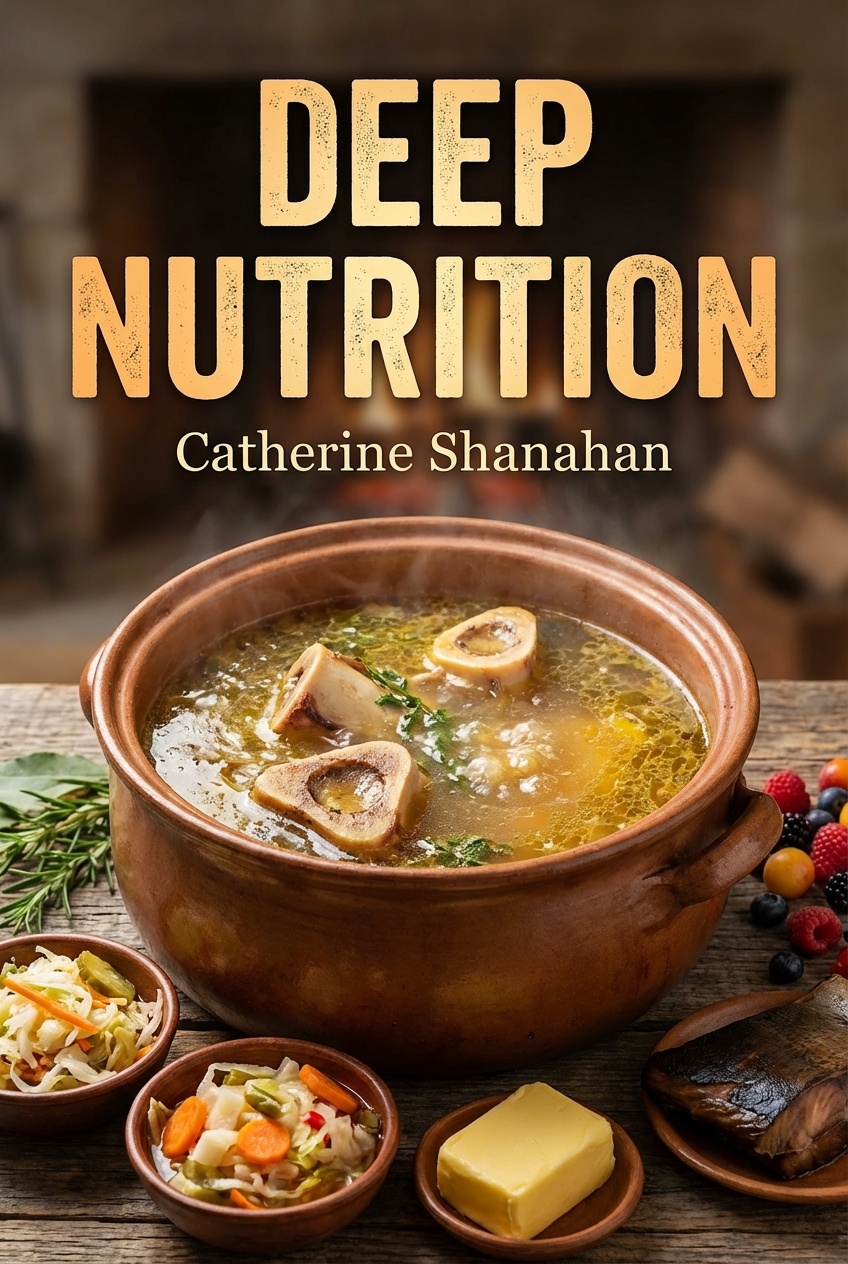
Why You should Read This Book?
This book reveals how traditional dietary wisdom holds the key to preventing modern chronic diseases and optimizing health across generations. It meticulously explains the "Four Pillars of World Cuisine," demonstrating how nutrient-dense, whole foods profoundly impact our physical structure and genetic expression. Read it to fundamentally transform your understanding of food and empower yourself with knowledge for lasting well-being and a healthier future.
Listen to PodcastDialogue turns nonfiction books into engaging podcast mini-series between two hosts, making key ideas easy to absorb on the go. It uses science-backed learning techniques to strengthen memory formation and complements the book's insights with supporting scientific evidence.
This theme from 'Deep Nutrition' explores the idea that traditional dietary practices, developed over thousands of years, hold the key to optimal health and genetic expression. It posits that our ancestors, through a deep connection with their environments, intuitively understood which foods provided the necessary building blocks for a strong and resilient body. The book argues that modern society has largely abandoned this ancestral wisdom in favor of processed, convenient foods, leading to a decline in overall health despite an increase in lifespan. The central message is a call to return to these time-tested nutritional strategies to reclaim our health and vitality.
While modern medicine has successfully extended the average human lifespan, 'Deep Nutrition' argues that the quality of our health has significantly declined. [8] The book suggests that we are experiencing age-related diseases at younger ages than previous generations. [7] This decline is attributed to the shift away from nutrient-dense, traditional foods towards a modern diet filled with processed items. [2, 8] The industrialization of food production has led to the replacement of natural, whole foods with options high in sugar and unhealthy fats, which are poor in essential nutrients. [7] The book makes a distinction between lifespan (how long we live) and healthspan (how long we live in good health), suggesting that while we are living longer, we are not necessarily living better or healthier lives. The rise in chronic illnesses, such as cancer, heart disease, obesity, and diabetes, is presented as evidence of this nutritional decline. [8]
Epigenetics is the study of how your behaviors and environment can cause changes that affect the way your genes work. 'Deep Nutrition' explains that our genes are not a fixed destiny but are in constant communication with their environment, with food being a primary source of information. [2] The nutrients from the food we eat can send chemical signals that can turn genes on or off, influencing everything from our physical appearance to our susceptibility to disease. [8] This means that our dietary choices have a direct and profound impact on our genetic expression. [2] The book emphasizes that these epigenetic changes can be passed down through generations, meaning the food choices of our ancestors can affect our health today, and our choices will impact our children and grandchildren. [4] This concept refutes the idea that we are simply victims of our genetic inheritance and instead empowers us with the knowledge that we can actively influence our genetic destiny through proper nutrition.
'Genetic Wealth' is a term used in 'Deep Nutrition' to describe the cumulative effect of good nutrition on our genes over generations. [2] Just as financial wealth can be passed down, so too can the positive (or negative) impacts of our ancestors' diets. When generations consistently consume nutrient-rich, traditional foods, they build up a 'genetic wealth' that manifests as strong, healthy bodies and a reduced risk of chronic disease. Conversely, a diet of processed, nutrient-poor foods can deplete this wealth, leading to a 'genetic debt' that can result in health problems for future generations. [4] The book suggests that many of the health issues we see today are a result of the depletion of our collective 'genetic wealth' due to the modern diet. The good news, however, is that this wealth can be rebuilt. By returning to a traditional way of eating, we can start to restore our 'genetic wealth' and create a healthier future for our children and grandchildren. [3]
'Deep Nutrition' proposes a strong link between a person's physical beauty, particularly facial symmetry, and their underlying health and genetic quality. [2] This concept, termed 'Dynamic Symmetry,' suggests that what we perceive as beauty is actually a biological indicator of good health and robust genetic programming. The book explains that a well-nourished body, especially during critical periods of development, is better able to follow its genetic blueprint, resulting in a more symmetrical and aesthetically pleasing physique. [6] Deviations from this symmetry, on the other hand, can be a sign of nutritional deficiencies or other environmental stressors that have interfered with the body's development. A book story in 'Deep Nutrition' references the work of Dr. Stephen Marquardt, whose research on facial proportions found that attractive faces across different cultures share common geometric ratios. [2] This suggests a universal standard of beauty that is rooted in optimal health and development. The book uses this connection to emphasize the importance of nutrition, not just for our internal health, but for our external appearance as well.
'The Sibling Strategy' is a concept from 'Deep Nutrition' that highlights the profound impact of a mother's nutritional status on the health of her children, particularly in relation to birth order. [2] The book posits that the firstborn child often has a health advantage because they have access to the mother's full store of nutrients. [4] With each subsequent pregnancy, especially if they are spaced closely together, the mother's nutritional reserves can become depleted. [4] This can result in later-born children having a higher risk of health problems, as well as less optimal physical development, including reduced facial symmetry. [4] A book story in 'Deep Nutrition' details the author's own research into this phenomenon, observing differences in health and appearance between siblings based on their birth order and the mother's diet between pregnancies. [4] The book emphasizes the importance of mothers replenishing their nutrient stores between pregnancies to ensure that each child has the best possible start in life. This concept underscores the critical role of maternal nutrition in shaping the health of future generations.
This section of 'Deep Nutrition' delves into the detrimental health effects of the modern, industrialized diet. It argues that the shift away from traditional, whole foods towards processed and refined products has been a primary driver of the chronic disease epidemic. The book specifically targets processed vegetable oils and excessive sugar as two of the most harmful components of the modern diet, linking them to a wide range of health problems, from metabolic dysfunction to brain damage. It also challenges long-held beliefs about dietary fats, arguing that the fear of saturated fat and cholesterol has been misguided and has led to the widespread consumption of unhealthy vegetable oils. The overarching message is a stark warning about the dangers of the modern diet and a call to return to a more natural, ancestral way of eating.
'The Great Nutrition Migration' is a term used in 'Deep Nutrition' to describe the dramatic shift in our food supply from traditional, locally sourced foods to industrially produced, processed products. [5] This migration, the book argues, has had devastating consequences for our health. Traditional diets, which were rich in nutrients and tailored to the local environment, have been replaced by a homogenized, global diet that is high in calories but low in essential nutrients. [2] The book highlights how the industrial food revolution has led to the mass production of refined foods, the introduction of harmful vegetable oils and sugars, and a decline in the nutrient density of our fruits and vegetables. [2] This shift has disconnected us from our food sources and the traditional knowledge of how to prepare food for optimal nutrition. [4] The result, according to the book, is a population that is overfed but undernourished, leading to a rise in chronic diseases and a decline in overall health.
'Deep Nutrition' identifies processed vegetable oils, such as corn, soy, canola, and sunflower oil, as one of the most harmful components of the modern diet. [1] The book explains that these oils are highly unstable and prone to oxidation, especially when heated, which creates harmful free radicals that can damage our cells and contribute to inflammation. [15] It argues that the consumption of these oils is a major contributor to a wide range of health problems, including heart disease and cancer. [25] The book places a particular emphasis on the damaging effects of vegetable oils on brain health, explaining that these unstable fats can disrupt the delicate balance of fats in the brain, leading to cognitive decline and an increased risk of neurodegenerative diseases. [15] It strongly advises against the consumption of these oils and recommends replacing them with stable, traditional fats like butter, olive oil, and coconut oil. [3]
'Deep Nutrition' challenges the long-held belief, known as the lipid hypothesis, that saturated fat and cholesterol are the primary causes of heart disease. The book argues that this theory is flawed and has led to a misguided fear of healthy, traditional fats. [7] It explains that our bodies need saturated fat and cholesterol for a variety of essential functions, including hormone production and cell membrane integrity. The book contends that the real culprits behind heart disease are the processed vegetable oils and excessive sugar that have become staples of the modern diet. [15] It redefines the concept of 'good' and 'bad' fats, arguing that natural, unprocessed fats from both animal and plant sources are beneficial, while industrially produced, processed fats are harmful. [3] The book encourages readers to shed their fear of healthy fats and embrace them as an essential part of a nutrient-dense diet.
'Deep Nutrition' highlights the detrimental effects of excessive sugar and refined carbohydrate consumption on our metabolic health. The book explains that when we consume these foods, they cause a rapid spike in blood sugar, which triggers the release of insulin. [1] Over time, a diet high in sugar and refined carbohydrates can lead to insulin resistance, a condition in which our cells become less responsive to insulin's signals. This can lead to a host of metabolic problems, including weight gain, type 2 diabetes, and an increased risk of heart disease. The book also explains how sugar can damage our cells through a process called glycation, where sugar molecules attach to proteins and fats, impairing their function. [1] It strongly advises limiting the consumption of sugar and refined carbohydrates and focusing on whole, unprocessed sources of carbohydrates, such as fruits, vegetables, and whole grains.
Create a free account to read the remaining themes and key concepts from this book.
Create an accountThis theme introduces the cornerstone of the 'Deep Nutrition' philosophy: 'The Four Pillars of the Human Diet'. These are four fundamental food categories that the author argues have been central to healthy traditional diets across the globe. [5] By incorporating these four pillars into our modern lives, the book suggests we can provide our bodies with the essential nutrients they need to thrive. The four pillars are: Meat Cooked on the Bone, Organs and Offal, Fresh Plant and Animal Products, and Fermented and Sprouted Foods. [2] The book provides a detailed explanation of the unique nutritional benefits of each pillar and offers practical advice on how to incorporate them into a modern diet. This framework moves beyond simplistic calorie counting and instead focuses on the quality and informational content of our food.
The first pillar of the 'Human Diet' emphasizes the importance of consuming meat that has been cooked with the bones, skin, and connective tissues intact. [2] 'Deep Nutrition' explains that these parts of the animal are rich in essential nutrients that are often lacking in modern diets, which tend to favor lean muscle meats. Cooking meat on the bone allows valuable nutrients, such as collagen, gelatin, and minerals, to be released into the meat and broth. [23] These nutrients are crucial for maintaining the health of our joints, bones, skin, and gut. [11] The book advocates for slow-cooking methods, such as braising and stewing, which are ideal for breaking down the connective tissues and extracting these valuable nutrients. [23] It also encourages the consumption of bone broth, which is a concentrated source of these beneficial compounds. [11]
The second pillar of the 'Human Diet' is the consumption of organ meats and offal, which are the internal organs and entrails of an animal. [2] 'Deep Nutrition' argues that these parts of the animal are the most nutrient-dense foods on the planet, packed with vitamins, minerals, and other essential nutrients that are often lacking in muscle meats. [11] For example, liver is an excellent source of vitamin A, iron, and B vitamins, while heart is rich in CoQ10, an important antioxidant. [23] The book acknowledges that many people in modern society are unaccustomed to eating organ meats, but it encourages readers to overcome their reservations and explore the wide variety of flavors and textures that these foods have to offer. It suggests starting with milder-flavored options, such as liver and heart, and gradually incorporating other organ meats into the diet. [23]
The third pillar of the 'Human Diet' emphasizes the importance of consuming fresh, unprocessed plant and animal products. [2] 'Deep Nutrition' explains that fresh foods are rich in enzymes, vitamins, and other delicate nutrients that can be destroyed by heat and processing. [17] The book advocates for a diet that includes a wide variety of fresh fruits, vegetables, and raw or lightly cooked animal products. It also highlights the importance of choosing high-quality, sustainably raised animal products, such as grass-fed meat and dairy, and organic produce, as these foods are more nutrient-dense and free from harmful chemicals. [11] The book encourages readers to connect with their local food systems and purchase fresh, seasonal foods from farmers' markets and other local producers.
The fourth and final pillar of the 'Human Diet' is the consumption of fermented and sprouted foods. [2] 'Deep Nutrition' explains that these traditional food preparation methods can enhance the nutritional value of foods and improve their digestibility. Fermentation is a process in which beneficial bacteria break down the sugars in food, creating a variety of beneficial compounds, such as probiotics, enzymes, and B vitamins. [11] Sprouting is the process of germinating seeds, grains, and legumes, which activates enzymes and increases the bioavailability of nutrients. [14] The book encourages the consumption of a wide variety of fermented foods, such as yogurt, kefir, sauerkraut, and kimchi, as well as sprouted grains, nuts, and seeds. [6]
This theme focuses on the practical application of the 'Deep Nutrition' principles in everyday life. It moves beyond the theoretical concepts and provides actionable advice on how to transition to a traditional, nutrient-dense diet. The book emphasizes a shift in mindset, from a focus on calorie counting to an understanding of food as information that communicates with our genes. It also highlights the importance of specific nutrients, such as collagen, for maintaining health and longevity. The goal of this theme is to empower readers with the knowledge and tools they need to implement the 'Human Diet' and experience the profound health benefits that it can offer.
'Deep Nutrition' challenges the conventional wisdom of calorie counting as a means of weight management and health improvement. [28] The book argues that this approach is overly simplistic and fails to account for the complex ways in which food interacts with our bodies. [28] Instead, it proposes a new paradigm in which we view food as information that communicates with our genes and influences their expression. [5] The book explains that different foods send different signals to our bodies, and that the quality of this information is far more important than the number of calories we consume. [13] For example, a nutrient-dense meal of grass-fed beef and organic vegetables will send a very different set of signals to our genes than a calorie-equivalent meal of processed junk food. The book encourages readers to shift their focus from counting calories to choosing high-quality, nutrient-dense foods that will provide their bodies with the right information to thrive.
Collagen is the most abundant protein in the human body and is a key component of our skin, bones, joints, and connective tissues. [20, 21] 'Deep Nutrition' highlights the critical role of collagen in maintaining our health, youthfulness, and longevity. [12] The book explains that as we age, our bodies produce less collagen, which can lead to wrinkles, joint pain, and other signs of aging. [20] It also explains how the modern diet, which is often low in collagen-rich foods and high in sugar and processed vegetable oils, can accelerate the breakdown of collagen in our bodies. [1] The book strongly advocates for a diet that is rich in collagen, which can be obtained from foods like bone broth, slow-cooked meats, and the skin of fish and poultry. [11] By consuming these foods, the book suggests, we can support our body's natural collagen production and maintain our health and vitality as we age.
'Deep Nutrition' provides practical guidance on how to transition to the 'Human Diet' in a way that is sustainable and enjoyable. The book recognizes that changing long-standing dietary habits can be challenging, and it offers a step-by-step approach to help readers make a smooth transition. [1] It suggests starting with small, manageable changes, such as replacing processed vegetable oils with healthy fats or incorporating one of the Four Pillars into your diet each week. The book also provides a wealth of practical tips and resources, including meal plans, recipes, and shopping guides, to help readers navigate their new way of eating. [2] The emphasis is on progress, not perfection, and the book encourages readers to be patient with themselves and to enjoy the process of discovering new foods and flavors. The ultimate goal is to make the 'Human Diet' a lifelong habit that will support optimal health and well-being for years to come.
Hear the key concepts from this book as an engaging audio conversation.
Listen to Podcast