
Why You should Read This Book?
This book reveals the groundbreaking connection between your gut microbiome and your brain, demonstrating how gut health profoundly impacts mood, memory, and neurological well-being. You'll gain practical, science-backed strategies to prevent and even reverse cognitive decline, depression, anxiety, and other brain disorders. Read it to empower yourself with the knowledge to cultivate a healthier gut and unlock a sharper, more resilient mind.
Listen to PodcastDialogue turns nonfiction books into engaging podcast mini-series between two hosts, making key ideas easy to absorb on the go. It uses science-backed learning techniques to strengthen memory formation and complements the book's insights with supporting scientific evidence.
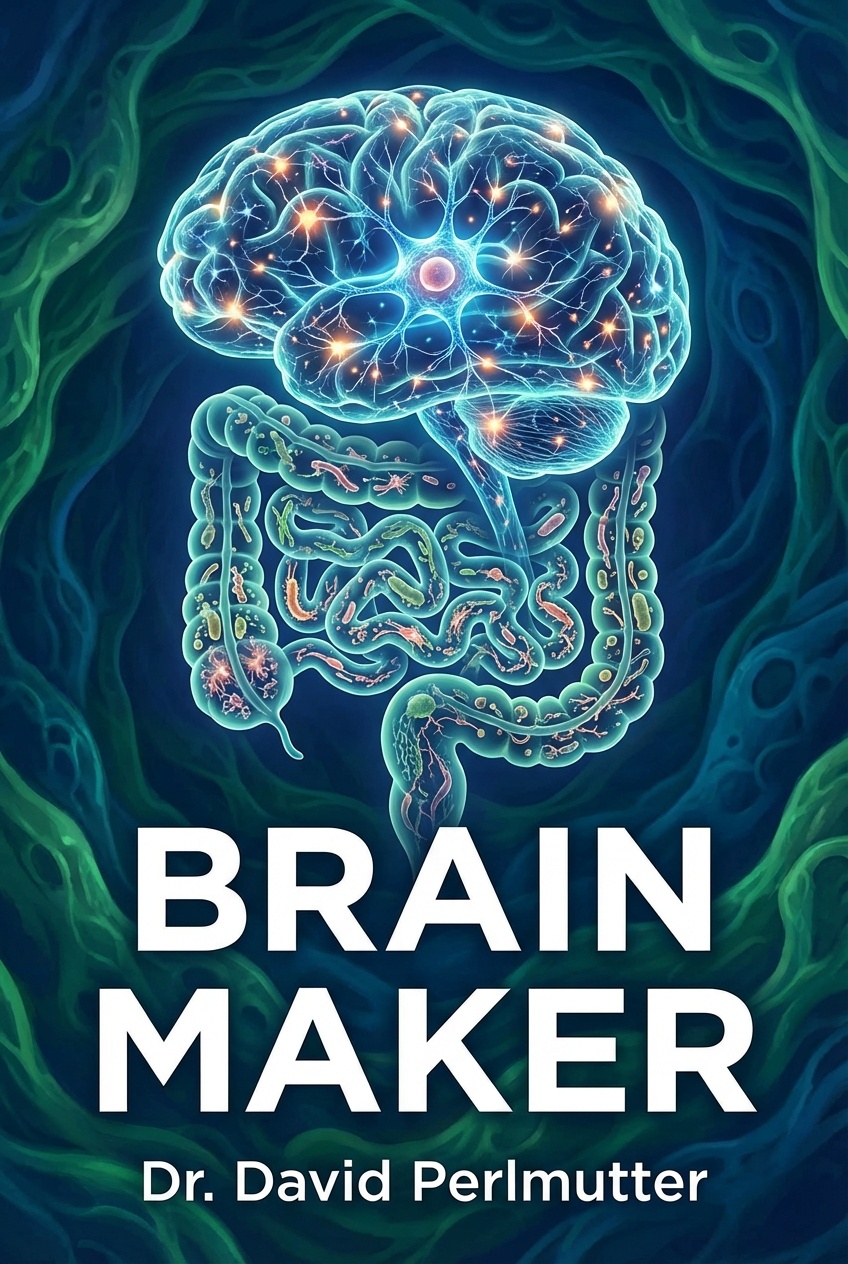
For decades, we believed the brain was an isolated fortress, immune to the chaos occurring in the rest of the body. Dr. Perlmutter dismantles this outdated view by introducing the 'gut-brain axis,' a complex communication network linking your digestive system directly to your brain. This isn't just about digestion; it's about control. The trillions of bacteria residing in your gut—collectively known as the microbiome—act as a control center for your health, influencing everything from your immune system to your mental clarity. When this ecosystem is healthy, your brain thrives; when it's sick, your brain suffers.
Your body is more bacterial than human. You play host to over 100 trillion microbes, a colony so vast and vital that scientists now consider it a 'forgotten organ.' These microscopic tenants weigh about three to four pounds—roughly the same as your brain—and they are not passive hitchhikers. They are active participants in your biology, regulating inflammation, absorbing nutrients, and even producing vitamins. The book argues that the state of this microbiome is the single most important variable in determining your brain's health and your risk for neurological disease.
The gut contains an independent network of over 100 million neurons, known as the Enteric Nervous System (ENS). This 'second brain' is so sophisticated that it can operate independently of the brain in your head. It produces many of the same neurotransmitters found in the brain, including dopamine and serotonin. Because of this neural density, your gut doesn't just digest food; it 'feels' and processes information, which explains why you get 'butterflies' in your stomach when you're nervous. The health of this second brain directly dictates the health of the first.
The primary telephone line connecting your two brains is the vagus nerve. This massive nerve travels from your brainstem down to your abdomen, touching almost every major organ along the way. It facilitates a bidirectional flow of information: while the brain sends signals down to the gut, the gut sends far more signals up to the brain. This means your gut bacteria can literally 'talk' to your brain via the vagus nerve, influencing your stress response and cognitive function. If your gut is inflamed, it sends distress signals up this line, putting your brain in a state of alarm.
The book presents compelling evidence that anxiety and depression are not just 'chemical imbalances' in the brain, but often symptoms of a disrupted microbiome. Beneficial bacteria produce mood-regulating chemicals like GABA, which calms the nervous system. When bad bacteria take over (dysbiosis), they produce toxins that induce anxiety and lower your resilience to stress. Dr. Perlmutter suggests that treating the gut may be more effective for some mood disorders than treating the brain directly with pharmaceuticals.
Inflammation is the cornerstone of Dr. Perlmutter's thesis on disease. While acute inflammation helps heal a cut, chronic inflammation acts like a slow-burning fire that destroys organs over time. The book posits that the brain is particularly vulnerable to this systemic fire. Crucially, the spark that lights this fire is almost always found in the gut. When the delicate balance of gut bacteria is lost, it triggers an immune response that spreads inflammation throughout the body, eventually crossing the blood-brain barrier and leading to neurodegeneration.
Most modern brain diseases, including Alzheimer's, Parkinson's, and MS, share a common root: inflammation. The book explains that this inflammation rarely starts in the brain itself. Instead, it begins in the gut when the immune system reacts to an imbalance of bacteria. This gut-based immune reaction releases inflammatory chemicals called cytokines into the bloodstream. These chemicals travel to the brain and damage neurons, leading to brain fog, fatigue, and eventually, serious degenerative diseases.
A healthy gut lining is a strong barrier, selectively allowing nutrients in while keeping toxins out. However, stress, poor diet, and drugs can loosen the 'tight junctions' between intestinal cells, creating a condition known as 'leaky gut.' This breach allows Lipopolysaccharides (LPS)—toxic structural components of bad bacteria—to leak into the bloodstream. The body identifies LPS as a severe threat and launches a massive inflammatory attack. This 'endotoxemia' is a major driver of the inflammation that degrades brain tissue.
The link between metabolic health and brain health is undeniable. High levels of systemic inflammation, often caused by high blood sugar and a leaky gut, are directly correlated with cognitive decline. The book refers to Alzheimer's disease as 'Type 3 Diabetes' to highlight how insulin resistance and inflammation destroy brain cells. When the body is inflamed, it cannot clear amyloid plaques (proteins associated with Alzheimer's) effectively, leading to their accumulation and the death of brain cells.
Create a free account to read the remaining themes and key concepts from this book.
Create an accountThe influence of the microbiome extends far beyond digestion, playing a pivotal role in conditions as varied as obesity, diabetes, autism, and ADHD. Dr. Perlmutter argues that specific bacterial compositions can either protect us from or predispose us to these conditions. By analyzing the gut bacteria of people with these disorders, scientists have found distinct patterns of dysbiosis (imbalance). This suggests that manipulating the microbiome could be a powerful therapeutic tool for treating diseases previously thought to be genetic or incurable.
Your gut bacteria determine how many calories you extract from your food. The book cites studies showing that obese individuals have a higher ratio of *Firmicutes* to *Bacteroidetes* bacteria. *Firmicutes* are efficient at extracting energy from food, meaning an obese person might absorb more calories from the same apple than a thin person. Furthermore, certain bacteria trigger insulin resistance, paving the way for Type 2 diabetes. This reframes obesity not just as a failure of willpower, but as a microbial problem.
We often think of serotonin as a brain chemical, but remarkably, 80-90% of the body's serotonin is manufactured in the gut by specialized cells and bacteria. This neurotransmitter is crucial for regulating mood, sleep, and appetite. If your gut microbiome is damaged, your serotonin production plummets, leading to depression and anxiety. The book emphasizes that you cannot have a healthy mental state without the raw materials and labor provided by a healthy gut ecosystem.
The book highlights a profound connection between gut dysbiosis and neurodevelopmental disorders. Dr. Perlmutter shares the story of Jason, a young boy with severe autism. Jason had a history of chronic ear infections and heavy antibiotic use. His gut was a wreck. After undergoing a Fecal Microbiota Transplant (FMT)—literally implanting healthy bacteria from a donor into his gut—Jason experienced a dramatic transformation. His behavior improved, he became more social, and his cognitive abilities surged. This story illustrates the potential of microbiome therapy to alleviate symptoms of neurological disorders.
Beyond just extracting calories, your bacteria also control your hunger hormones, ghrelin and leptin. Pathogenic bacteria can hijack your vagus nerve to send cravings for the foods *they* thrive on—typically sugar and processed carbs. This creates a vicious cycle where you eat junk food, feed the bad bacteria, and they scream for more. Restoring a healthy microbiome can quiet these cravings, making weight loss feel natural rather than a constant battle against hunger.
Our modern world is a minefield for our microscopic allies. Dr. Perlmutter identifies a 'quadruple threat' that has decimated the human microbiome in recent decades: the Western diet, chronic medication use, environmental toxins, and hyper-hygiene. These factors collectively wipe out diversity in the gut, leaving us vulnerable to the diseases of civilization. Understanding these threats is the first step toward defending your internal ecosystem.
The Standard American Diet is catastrophic for gut health. High in processed sugar and low in fiber, it starves beneficial bacteria while feeding pathogenic yeast and fungi. The book specifically demonizes fructose (especially high-fructose corn syrup), noting that it is not just empty calories but a pro-inflammatory toxin that alters the gut lining and promotes insulin resistance. This diet creates a monoculture in the gut, reducing the diversity needed for a resilient immune system.
Even if you don't have Celiac disease, gluten can be harmful. The book explains that gluten triggers the release of a protein called zonulin. Zonulin's job is to regulate the tight junctions of the gut wall. When zonulin is elevated by gluten intake, these junctions pop open, causing intestinal permeability (leaky gut). This allows toxins to enter the bloodstream and inflame the brain. Dr. Perlmutter argues this mechanism happens to some degree in *everyone* who eats gluten, not just those who are sensitive.
Antibiotics are described as a 'nuclear option' for the microbiome. While they save lives, they also indiscriminately kill beneficial bacteria, causing long-term shifts in gut ecology that can take months or years to recover from. The book also warns against other common drugs like NSAIDs (ibuprofen), birth control pills, and acid blockers, all of which alter the gut environment. Overuse of these drugs is a major contributor to the modern epidemic of chronic illness.
The initial 'seeding' of a baby's microbiome is a critical event. Vaginal birth transfers the mother's vaginal and fecal bacteria to the infant, providing the starter kit for their immune system. C-section babies miss this exposure and are instead colonized by skin and hospital bacteria. Similarly, breast milk contains unique prebiotics that feed specific infant bacteria. The book argues that the rise in C-sections and formula feeding correlates with the rise in allergies, autism, and autoimmune issues.
The good news is that the microbiome is dynamic and can change rapidly. Dr. Perlmutter outlines a comprehensive protocol to 'reseed' and 'feed' your gut. This involves removing the toxins that kill bacteria, introducing new beneficial strains through food and supplements, and providing the fiber they need to thrive. The goal is to cultivate a diverse, robust ecosystem that supports brain health and lowers inflammation.
The most natural way to introduce good bacteria is through food. The book champions fermented foods like kimchi, sauerkraut, kombucha, kefir, and yogurt (with live cultures). These foods are teeming with diverse bacterial strains that can colonize the gut. Unlike pills, these foods also provide the acidic environment that helps these bacteria survive the journey through the stomach.
Probiotics are the seeds, but prebiotics are the fertilizer. Prebiotics are specific types of indigestible fiber that beneficial bacteria eat. Without them, your good bacteria will starve. The book recommends foods rich in prebiotic fiber such as Jerusalem artichokes, jicama, dandelion greens, garlic, onions, and leeks. Eating these foods ensures that the good bacteria you introduce can survive and multiply.
While food is the foundation, supplements can accelerate healing. The book recommends a high-quality probiotic supplement containing *Lactobacillus* and *Bifidobacterium* strains. Additionally, Dr. Perlmutter advises taking DHA (an omega-3 fatty acid) to reduce inflammation, turmeric (curcumin) to activate antioxidant pathways, and coconut oil for its neuroprotective medium-chain triglycerides (MCTs). Vitamin D is also crucial for maintaining the gut barrier.
You cannot fix your gut with diet alone if your lifestyle is toxic. High cortisol levels from chronic stress actively kill beneficial bacteria and increase gut permeability. Conversely, aerobic exercise has been shown to increase the diversity of the microbiome. The protocol emphasizes the need for sleep, stress management, and movement as non-negotiable pillars of gut health.
The final section of the book moves from theory to practice, offering a concrete roadmap for implementation. It provides a structured meal plan and looks ahead to the future of medicine. Dr. Perlmutter emphasizes that we are on the cusp of a medical revolution where treating the microbiome will be the standard of care for chronic diseases, moving away from symptom management toward root-cause resolution.
The book provides a 'Brain Maker' meal plan designed to slash inflammation and reboot the microbiome. It is high in healthy fats, low in carbohydrates, and completely gluten-free. A typical day might include eggs cooked in coconut oil for breakfast, a large salad with grilled salmon and vinaigrette for lunch, and grass-fed beef with asparagus and sauerkraut for dinner. The plan eliminates all grains and sugars, focusing entirely on nutrient-dense whole foods.
To maintain long-term health, the book summarizes six strategies: 1) Choose foods rich in probiotics, 2) Go low-carb and high-quality fat, 3) Enjoy wine, tea, coffee, and chocolate in moderation (they contain beneficial polyphenols), 4) Choose foods rich in prebiotics, 5) Drink filtered water (to avoid chlorine which kills bacteria), and 6) Fast intermittently to give the gut a rest.
The book concludes with a look at the cutting edge of science, specifically Fecal Microbiota Transplantation (FMT). This procedure involves transferring stool from a healthy donor to a sick patient. Dr. Perlmutter shares the story of a man with Multiple Sclerosis who was wheelchair-bound. After undergoing FMT, his microbiome was restored, and he regained the ability to walk without a cane. This powerful anecdote underscores the potential of the microbiome to reverse even severe autoimmune conditions.
Hear the key concepts from this book as an engaging audio conversation.
Listen to Podcast